Experiencing catastrophic structural damage to a residential home or commercial business facility is one of the most stressful events a property owner can face. Whether caused by a devastating house fire, a localized flash flood, or a severe Midwestern tornado, the physical destruction of real estate leaves owners facing immediate safety hazards, displacement, and massive insurance remediation hurdles. Amid organizing emergency repairs and coordinating insurance adjusters across the Dayton metropolitan area, property owners frequently overlook their ongoing tax liabilities. However, under state law, you are not legally obligated to pay real estate taxes based on the historic, pristine condition of a building that has been structurally compromised or entirely leveled. The state of Ohio provides an official regulatory mechanism to slash your tax liabilities to match the diminished physical reality of your land assets. This definitive guide details the process of filing form DTE 26 Montgomery County protocols, outlines how to secure a property destruction tax reduction Dayton framework, and details how to manage a storm damage valuation adjustment Ohio application.
The Statutory Role of the Montgomery County Auditor in Damaged Property Assessments
Under the Ohio Revised Code, the County Auditor serves as the primary constitutional official responsible for assessing, adjusting, and maintaining the factual valuation duplicate of all real estate holdings. When an emergency event severely alters the structural integrity of a building, the Auditor possesses direct legal authority to intervene and recalculate the property’s taxable footprint. The Auditor provides critical relief and administrative assistance to impacted property owners through several core enforcement mechanisms.
- Dispatches Field Appraisal Inspectors.
The Auditor’s specialized commercial and residential appraisal teams travel directly to disaster sites to perform a physical county auditor damaged property assessment. - Applies Proportional Valuation Reductions.
The Auditor manually adjusts the tax rolls, ensuring that the property’s assessed value is lowered proportionally to the severity of the structural loss. - Recalibrates Mid Cycle Tax Duplicates.
The Auditor updates the official real estate system mid year, preventing homeowners from facing unfair tax liabilities during their rebuilding timelines.
Understanding the Property Destruction Tax Reduction Formula
The financial relief provided under this framework is calculated using a strict statutory formula determined by the specific calendar quarter in which the destruction occurred. Because real estate taxes are paid in arrears in Ohio, the state scales the reduction to ensure that the closer a disaster occurs to the start of the year, the larger the tax relief credit applied to that tax year’s bill. The three column table below outlines how the county distributes a property destruction tax reduction Dayton allocation across individual calendar cycles.
| Calendar Quarter of Structural Damage | Official Statutory Valuation Reduction | Impact on Your Next Property Tax Bill |
| First Quarter (January – March) | 100% Reduction of the total appraised value of the destroyed structural components for that calendar year. | Maximum Relief. Eradicates the entire structural tax burden for the year, leaving only the baseline land value taxable. |
| Second Quarter (April – June) | 75% Reduction of the certified appraised value of the damaged or destroyed building components. | Substantial Relief. Grants a major tax credit that significantly drops your upcoming semiannual tax bill obligation. |
| Third & Fourth Quarters (July – Dec) | 50% or 25% Fractional Reductions applied based on the exact remaining month of the calendar year. | Targeted Relief. Provides a calculated, prorated deduction that helps offset building overhead while insurance repairs commence. |
Step by Step Guide to Filing Form DTE 26 and Adjusting Your Tax Burden
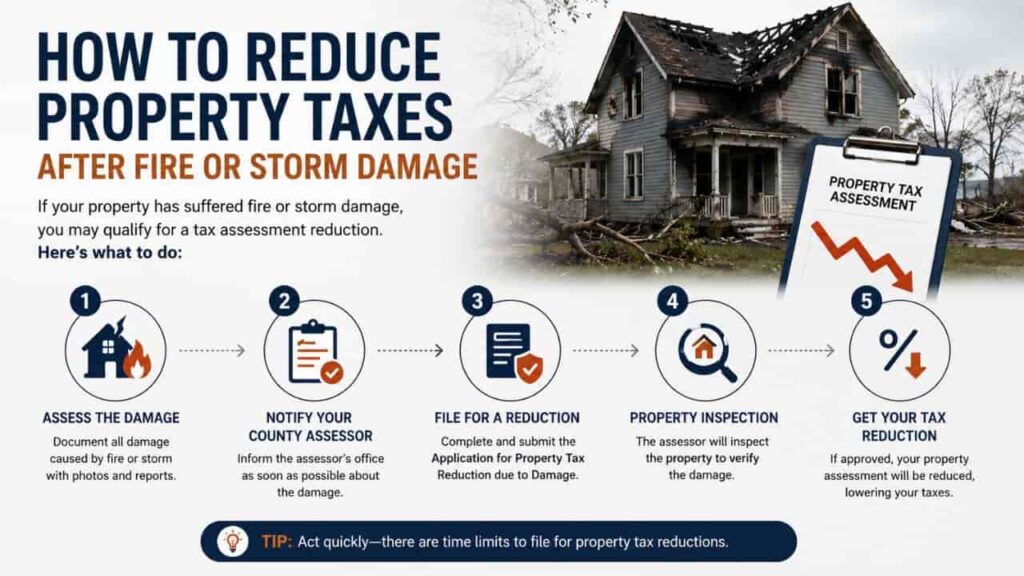
To successfully claim your structural valuation adjustment without facing administrative delays from the real estate divisions, you must follow this systematic step by step roadmap.
Step 1. Document the Physical Damage Instantly
Before any structural cleanup or debris removal begins, capture exhaustive visual evidence of the disaster. Take high resolution photographs and videos of all interior and exterior damage, detailing structural foundational cracks, roof collapses, fire charring, or water line marks.
Step 2. Compile Official Emergency Agency Reports
Secure a certified copy of the official fire department incident report if your property suffered fire damage. For severe storm, wind, or tornado damage, gather local police logs, structural engineering assessments, or formal insurance adjuster summaries detailing the absolute scope of the loss.
Step 3. Complete the Form DTE 105A / DTE 26 Package
Download Form DTE 26 (Application for Valuation Deduction for Destroyed or Damaged Real Property) directly from the Montgomery County Auditor’s digital forms catalog. Complete all sections carefully, providing your unique multi digit parcel identification number (PIN), the exact calendar date of the destruction event, and your formal description of the physical damage.
Step 4. Submit Your Request Packets Before the Statutory Deadline
File your completed Form DTE 26 along with your attached photographs and emergency reports with the Auditor’s office in downtown Dayton. Under current Ohio statutory rules, applications must be submitted by December 31st of the calendar year in which the destruction occurred to secure immediate relief for that specific tax cycle.
Step 5. Facilitate the County Field Inspection and Review Your Credit
Once your form is logged, coordinate with the Auditor’s real estate division to allow a county field appraiser to access the property perimeter. The inspector will verify your documentation against the real world site conditions. Once validated, the Auditor will update your profile, and your next Once validated, the Auditor will update your profile, and your next Montgomery County property tax statement will display a structural deduction credit statement will display a structural deduction credit.
Long Term Impact on Rebuilding and Future Appraisals
An essential operational detail that homeowners must keep in mind is what happens once the property is completely rebuilt or repaired. The property tax reduction provided by Form DTE 26 is a temporary structural adjustment designed to offer financial breathing room while the building is uninhabitable or damaged.
As you secure your municipal building permits and finish construction on your new or restored home, the county building department will notify the Auditor’s mapping team. A field appraiser will eventually return to the site to calculate a new structural valuation baseline for the newly completed building. This ensures that your tax profile updates accurately as your property investments recover their full market utility.
Conclusion
Executing a timely filing form DTE 26 Montgomery County track is an indispensable legal right for property owners facing the aftermath of a natural disaster or severe property fire. By utilizing the official safety nets managed by the County Auditor, you can quickly realign your Montgomery County property tax burdens with the true physical state of your real estate holdings. Do not go through the reconstruction process alone, utilize this expert guide to secure your statutory tax credits and protect your financial cash flow while you rebuild.
FAQs
What is the filing deadline for a property destruction tax reduction?
You must submit Form DTE 26 to the Auditor’s office by December 31st of the calendar year in which the physical damage or destruction occurred.
Can I get a tax reduction for minor cosmetic storm damage?
No. The program requires substantial structural damage that significantly alters the overall market value of the building, rather than simple cosmetic or minor landscape damage.
How does the county calculate the exact property tax deduction amount?
The Auditor proration formula applies a 100%, 75%, 50%, or 25% reduction to the structural value based on the specific calendar quarter the damage occurred.
What happens to my taxes once my house is completely rebuilt?
The Auditor will conduct a new field assessment of the finished structure and restore the appropriate property tax valuation baseline based on the new construction.
Does the county notify my mortgage company about the tax reduction?
The Auditor updates the public tax duplicate, but you should forward your approved Form DTE 26 directly to your mortgage lender to adjust your escrow payments.