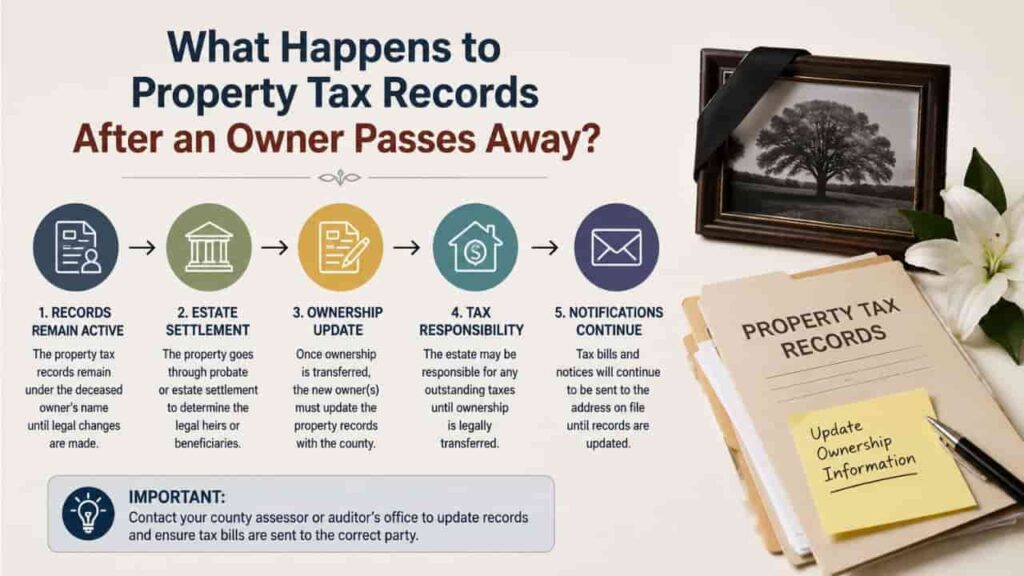
The passing of a loved one brings a complex array of emotional burdens alongside immediate administrative obligations. Amid organizing estate settlements, handling legal wills, and managing personal assets across the Dayton metropolitan area, surviving family members frequently overlook the status of the decedent’s real estate holdings. However, failing to update local property records immediately after a homeowner’s death can disrupt mortgage escrow allocations, freeze real estate transactions, and trigger the accidental forfeiture of critical cost saving tax reductions. In the state of Ohio, real estate titles do not update automatically upon a person’s passing, specific legal filings must be processed to transition ownership and update the public tax rolls. This definitive guide details the exact steps for updating property title after death Dayton protocols, explains the mechanics of a transfer on death deed Montgomery County framework, and outlines how to manage probate court land transfers cleanly.
The Statutory Role of the Montgomery County Auditor in Estate Land Transfers
Under the Ohio Revised Code, the County Auditor operates as the official transfer official for all real estate transactions occurring within county lines. No deed, certificate of transfer, or inheritance affidavit can be legally recorded by the County Recorder until it has first been reviewed, approved, and stamped by the Auditor’s specialized transfer and mapping department. The Auditor provides essential public data tracking and asset preservation through several core administrative responsibilities.
- Enforces Chain of Title Integrity.
The Auditor meticulously checks incoming estate transfer paperwork to ensure the legal description matches historical parcel maps perfectly. - Calculates Statutory Conveyance Fees.
The Auditor determines the applicable conveyance fees or processes formal exemption forms (such as transfers made via an inheritance or a deed of gift). - Updates the Public Tax Duplicate.
Once an estate document is validated, the Auditor instantly updates the master tax duplicate, ensuring future Montgomery County property tax statements are addressed to the correct legal heirs.
Understanding Transfer Pathways, TOD Deeds, Survivorship, and Probate
The specific administrative process required to update county tax records depends entirely on how the decedent structured their real estate deed during their lifetime. Ohio law provides several clear pathways to transfer land, some of which allow families to bypass expensive court oversight entirely. The three column table below outlines the primary transfer mechanisms used to update local property rolls.
| Real Estate Transfer Pathway | Official Legal Mechanism in Ohio | Impact on Probate Court Requirements |
| Transfer on Death Designation (TOD) | A pre recorded deed identifying specific beneficiaries who will instantly inherit the parcel upon the owner’s death. | Bypasses Probate. Title shifts directly to beneficiaries without court intervention, requiring only a simple county filing. |
| Joint Tenancy with Survivorship | A deed where two or more owners share equal title rights, containing explicit “survivorship” language. | Bypasses Probate. Ownership shifts automatically to the remaining living partner once a localized status affidavit is logged. |
| Certificate of Transfer (Probate) | A court issued document directing the county to transfer real estate from a deceased person’s estate to named heirs or will beneficiaries. | Requires Full Probate. The estate must go through formal probate administration before the court issues the transfer order to the Auditor. |
Step by Step Guide to Updating Property Tax Records After a Loss
To transition a family member’s property title smoothly and ensure local compliance without facing bureaucratic processing delays, use this systematic step by step roadmap.
Step 1. Secure Certified Copies of the Official Death Certificate
Obtain multiple certified copies of the decedent’s official death certificate from the local public health department or your chosen funeral home director. The Auditor and Recorder require original or certified documents to validate any structural name removal filings.
Step 2. Identify the Current Underlying Deed Classification
Access the public real estate search portal hosted by the Montgomery County Auditor. Input the parcel address to review the current recorded deed image. Determine if the deed contains an active Transfer on Death (TOD) designation or a joint survivorship clause.
Step 3. Prepare the Appropriate Statutory Affidavit
- For TOD Deeds.
Prepare an Affidavit of Transfer on Death Beneficiary. This legal form identifies the decedent, lists the recording data of the original TOD deed, and names the surviving beneficiaries taking title. - For Survivorship Deeds.
Draft an affidavit of healthy survivorship Ohio title specialists recognize (commonly termed an Affidavit of Survivorship). This form officially notes the passing of the co owner and requests their name be cleared from the tax duplicate.
Step 4. Submit Your Paperwork to the Auditor’s Transfer Desk
Take your completed affidavit and certified death certificate to the Auditor’s real estate transfer office in downtown Dayton. If the transfer is an inheritance through a TOD, survivorship, or probate order, complete a Statement of Reason for Exemption From Real Property Conveyance Fee (Form DTE 100EX). The Auditor will review your documents, apply an official transfer stamp, and collect a nominal per page administrative fee.
Step 5. Finalize the Process at the County Recorder’s Office
Immediately following the Auditor’s approval stamp, take the processed documents next door to the Montgomery County Recorder’s office. Pay the necessary recording fees to have the affidavit permanently logged into the county’s public deed books. Once recorded, the Auditor’s mapping database will update to show the new legal owners on the public tax rolls.
The Critical Risk of Missing Deadlines, Protecting Your Tax Exemptions
An essential operational detail that families must monitor during estate settlement is the immediate status of active property tax reductions. If the deceased owner was receiving the Senior Homestead Exemption or a Disabled Veteran credit, those tax breaks are permanently tied to that individual’s personal age, disability status, and income profile.
Upon their passing, those specialized reductions must be re evaluated. If a surviving spouse inherits the home and meets the program rules, they must file a new application under their own name. Failing to update the property title and failing to inform the Auditor’s homestead division of the transition can result in a retroactive claw back of unearned tax discounts, leading to an unexpected tax bill balance later on.
Conclusion
Updating county real estate data following a property owner’s passing is a vital requirement for safeguarding your family’s real estate investments in Ohio. Whether you are processing a straightforward transfer on death deed Montgomery County path, filing an affidavit of healthy survivorship Ohio form, or managing structured probate court land transfers, working alongside the guidelines managed by the County Auditor is essential. Keeping your titles updated ensures complete legal alignment with public records and keeps your real estate transactions running smoothly.
FAQs
How long do I have to record a Transfer on Death deed after an owner dies?
There is no strict statutory deadline, but you should record the beneficiary affidavit promptly to update tax records and avoid mortgage escrow calculation problems.
Can I sell a inherited home before updating the Auditor’s property records?
No. The underlying chain of title must be officially updated through the Auditor and Recorder’s offices before a new buyer can secure title insurance.
What is an affidavit of healthy survivorship used for in Ohio?
It is a sworn legal document used to officially remove a deceased co owner’s name from a property title when a survivorship clause exists.
Do I have to pay heavy conveyance fees on an inherited estate transfer?
No. Property transfers resulting from wills, trusts, or TOD deeds are generally exempt from standard county conveyance fees using official form DTE 100EX.
What happens to a homestead exemption after the primary homeowner passes away?
The exemption is removed for the following tax year unless an eligible surviving spouse who meets the program criteria files to retain the tax reduction.