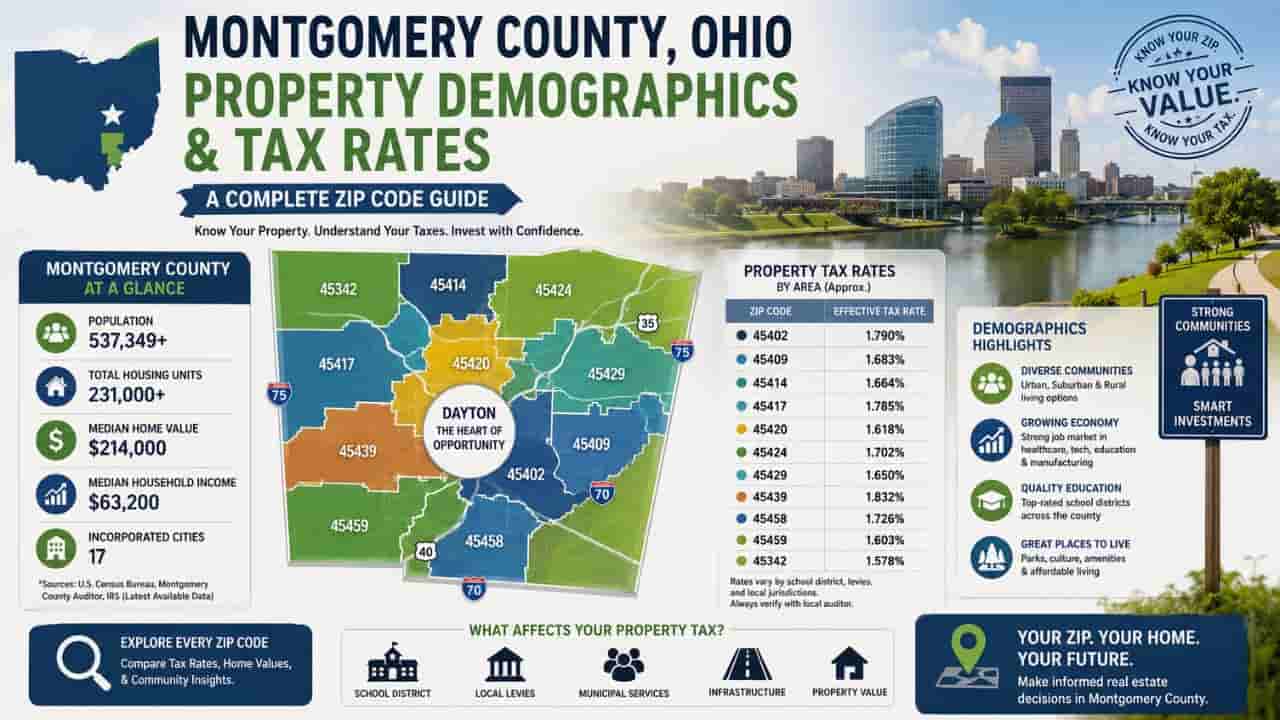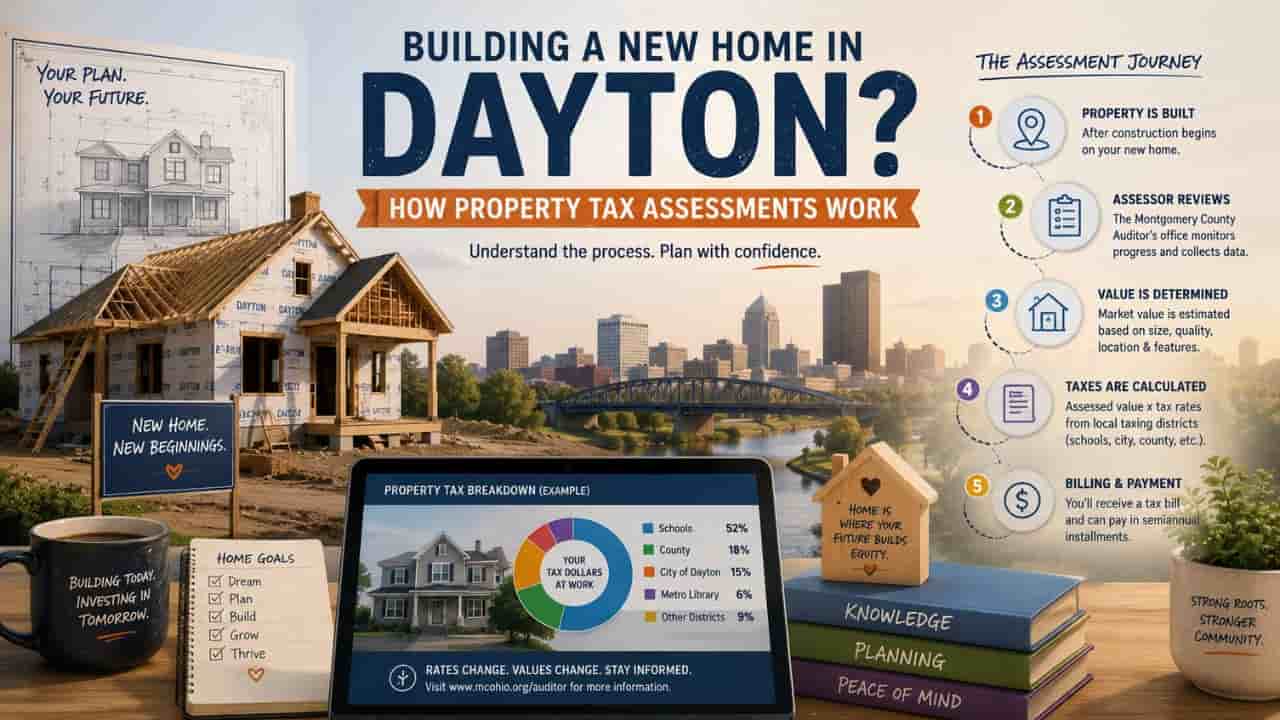
When evaluating the comprehensive financial carrying costs of real estate assets within the Dayton metro region, savvy home buyers and institutional investors look far beyond structural listing prices. In the state of Ohio, the primary operational driver of your annual property tax bill is not actually your municipal city overhead or baseline county administrative fees. Instead, the local public education system absorbs the single largest percentage of your annual real estate tax assessment. Because public school financing is tied directly to localized voter approved property levies, moving just one block over into an adjacent school district boundary can alter your annual overhead by thousands of dollars. Understanding these overlapping geographic tax zones requires a precise understanding of local millage distributions. This definitive guide delivers an authoritative Dayton Ohio property tax breakdown, analyzes the true school levy impact property tax allocations, and compares the real world tax footprints across key regional markets.
The Statutory Role of the Montgomery County Auditor in Allocating School Tax Levies
Under Ohio administrative frameworks, the County Auditor operates as the essential regulatory manager responsible for tracking, calculating, and enforcing voter approved educational tax levies across all individual school districts. While local boards of education and taxpayers vote on individual operating levies, permanent improvement bonds, and emergency funding measures, they lack the legal mechanism to place these fees on a parcel directly. Instead, the certified voting results are transmitted directly to the Auditor’s specialized tax settlement division. The Auditor directly supports the public and helps property searchers through several critical calculations.
- Applies the Ohio House Bill 920 Reduction Factors.
The Auditor implements statutory state reduction metrics that prevent school districts from collecting automated tax windfalls when inflationary property values spike. - Calculates the Effective Millage Rates.
By adjusting the raw voted millage based on current local property values, the Auditor ensures school districts collect only the exact fixed dollar amount originally approved by voters. - Manages the Semiannual Revenue Settlements.
The Auditor accurately collects real estate tax revenues from individual parcels and distributes those funds directly to regional school boards to sustain public education infrastructures.
Analyzing Regional Tax Footprints, Centerville, Kettering, and Huber Heights
To understand how school district designations dictate your final Montgomery County property tax burden, you must analyze how individual sub markets structure their local funding. While a city like Centerville might boast exceptional educational infrastructures, those amenities are sustained by higher effective millage layers. Conversely, a district like Huber Heights utilizes a different balance of property levies and municipal income tax structures to finance its local developments. The three column comparison table below highlights how these localized school districts impact your baseline real estate financial underwriting.
| Local Ohio School District | Core Funding Mechanism & Levy Structures | Real Estate Property Tax Burden Impact |
| Centerville City Schools | Relies heavily on high voted property tax millage layers, operating multiple permanent improvement levies to support expansive suburban facilities. | High Impact. Results in a premium property tax burden, making it critical for buyers to pre calculate tax adjustments before purchasing a home. |
| Kettering City Schools | Utilizes a balanced mix of historical operational levies alongside targeted city income tax allocations to maintain dense urban education systems. | Moderate to High Impact. Features a consistent, stable tax environment with structured adjustments occurring during regular county reassessment cycles. |
| Huber Heights City Schools | Features a lower effective property tax millage structure, balancing its public school requirements across a broader footprint of commercial industrial zones. | Moderate Impact. Offers a more conservative property tax obligation for residential homeowners while maintaining competitive community assets. |
Step by Step Guide to Evaluating School Tax Impacts on a Specific Property
If you are analyzing a prospective real estate asset and need to determine its true school based financial obligations, use this professional step by step methodology.
Step 1. Query the Target Parcel on the Auditor’s Portal
Open the official online real estate database hosted by the Montgomery County Auditor. Input your target street address or unique multi digit parcel identification number (PIN) to generate the primary property information command center.
Step 2. Access the Detailed Tax Distribution View
Once inside your primary parcel dashboard, locate the operational tab menu and click directly on the link labeled Tax Distribution or Detailed Tax Calculations. This interface breaks down the exact destination of every tax dollar collected.
Step 3. Identify the Specific Tax District Code
Look at the top of the tax summary panel to identify the designated three digit or five digit alpha numeric Tax District Code. This code indicates the exact geographical intersection of your municipality and your school district boundary line.
Step 4. Audit the School Levy Allocation Lines
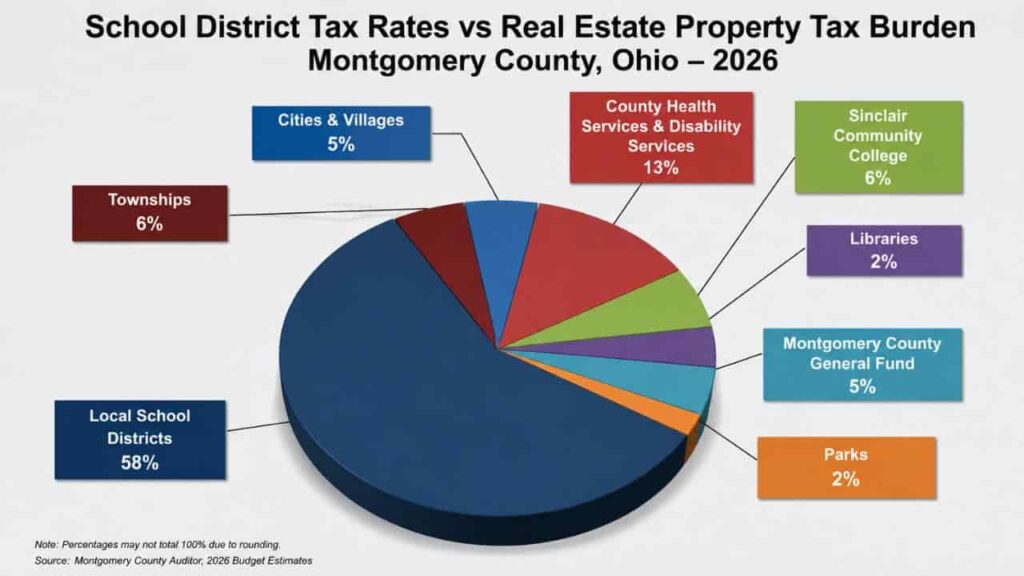
Scroll down to the visual pie chart or itemized text ledger. Locate the specific line labeled with your district’s school board name. Review the exact percentage distribution to verify how much of your total annual bill is going directly to public school operations versus municipal services.
How School Levies Directly Shift Long Term Property Values
For real estate investors evaluating the highest tax districts Montgomery County map profiles, the interplay between school levies and home values requires strategic balancing. High school tax millages can act as a double edged sword. On one hand, top tier public school districts attract consistent family demographics, which maintains intense buyer demand, keeps rental vacancy rates low, and drives strong long term structural property appreciation.
On the other hand, an aggressive new school levy can instantly raise a property’s annual tax escrow obligation by hundreds of dollars overnight, squeezing cash flow margins for landlords and reducing the maximum purchasing power of first time homebuyers. Performing a detailed analysis of school levy histories via the Auditor’s site ensures that your long term investment underwriting accounts for upcoming community voting trends.
Conclusion
Understanding the complex variations across Montgomery County school district tax rates is a mandatory skill for achieving precise real estate underwriting in Ohio. By moving past simple gross tax totals and utilizing the Auditor’s distribution tools, you can easily decode how school levies impact your annual overhead in Centerville, Kettering, or Huber Heights. Staying informed on these educational tax allocations protects your investment portfolios and ensures your home purchase timelines align with verified county public records. Keep this tactical breakdown bookmarked for your next neighborhood property search project.
FAQs)
Why does my property tax bill change when I move into a different school district?
Each school district passes its own independent operational levies and capital bonds, creating entirely different tax burdens from one neighborhood boundary line to the next.
What is Ohio House Bill 920 and how does it protect my property?
House Bill 920 freezes school levy collection amounts, lowering the effective millage rate automatically when property values rise so school districts cannot collect unvoted tax windfalls.
Where can I find the exact percentage of my tax bill that goes to schools?
Look up your parcel number on the Auditor’s site and select the Tax Distribution tab to view an itemized breakdown of your property tax allocations.
Do renters have to pay Montgomery County school district property tax levies?
Renters do not pay the county directly, but landlords factor school property tax overhead into monthly rental prices, passing the financial obligation down to the tenant.
What is the difference between voted millage and effective millage rates?
Voted millage is the initial tax rate approved by local voters. Effective millage is the actual rate applied by the Auditor after adjusting for inflation via HB 920.