Every week, tens of thousands of families across the Dayton metropolitan area push shopping carts through the aisles of local supermarkets, picking up fresh produce, deli meats, and bulk whole foods. Many of these everyday consumer commodities are sold not by the piece, but by their physical mass. We place a bag of honeycrisp apples on a digital hanging scale, wrap up a portion of structural deli cheese, and accept the printed barcode price at the checkout counter without a second thought. We take it for granted that the weight stamped on the pricing label matches the actual physical mass sitting on the tray. However, ensuring absolute financial fairness at the point of sale is a major regulatory undertaking. In the state of Ohio, this financial transparency is maintained by a specialized division of local government executing meticulous field validations. This definitive guide takes you behind the scenes of a grocery scale inspection Dayton Ohio operation, decodes the technical mechanics of a commercial scanner audit Montgomery County field shift, and explains how inspectors deploy pricing accuracy test weights to enforce absolute consumer equity.
The Statutory Role of the Montgomery County Auditor in Grocery and Retail Inspections
Under the Ohio Revised Code, the County Auditor is the official local Sealer of Weights and Measures. This critical designation establishes the Auditor as the ultimate front line champion of local economic equity and consumer protection. Whenever a retail transaction involves purchasing an asset by weight, measure, count, or liquid volume, the Auditor’s specialized enforcement inspectors possess full statutory authority to enter the commercial facility and test the equipment. The Auditor directly supports consumers and maintains retail integrity through several core operational pillars.
- Conducts Routine, Unannounced Inspections.
Field inspectors enter local grocery stores, delis, and commercial retail hubs without warning, preventing merchants from temporarily recalibrating systems ahead of time. - Calibrates Points of Interaction.
Every device from the self checkout scanner scales to the hidden digital platform units operating behind meat counters, is meticulously tested against certified state standards. - Protects Family Grocery Budgets.
By identifying and condemning faulty equipment that overcharges consumers, the Auditor ensures that local shoppers receive exactly what they pay for at the register.
Inside the Field Inspection, Scale Testing and Scanner Auditing Systems
The physical execution of a county consumer protection audit goes far beyond checking a scale’s digital screen alignment. Field teams carry out exhaustive physical testing protocols using precision instruments calibrated directly against the National Institute of Standards and Technology (NIST) baselines. The three column table below outlines the core components evaluated by weights and measures inspectors during an official retail supermarket audit.
| Supermarket Audit Component | Official Technical Testing Methodology | Direct Impact on Consumer Pricing Accuracy |
| Precision Scale Calibration | Inspectors place certified pricing accuracy test weights incrementally on the scale platform to check for linearity errors. | Ensures that a scale reads accurately across its entire range, whether it is weighing a light half pound clove of garlic or a heavy twenty pound turkey. |
| Point of Sale Scanner Audit | Field inspectors select random items from store shelves, scan them at the front register, and compare the scanned price to the advertised shelf tag. | Eliminates hidden electronic system programming errors or outdated promotional software databases that lead to systemic overcharging. |
| Tare Weight Deduction Check | Inspectors verify that the store automatically subtracts the physical weight of plastic deli containers, paper bags, or structural packaging. | Prevents retail merchants from illegally charging the premium per pound food rate for the weight of the raw packaging materials. |
The Mechanics of Scale Testing, Deploying Certified Test Weights
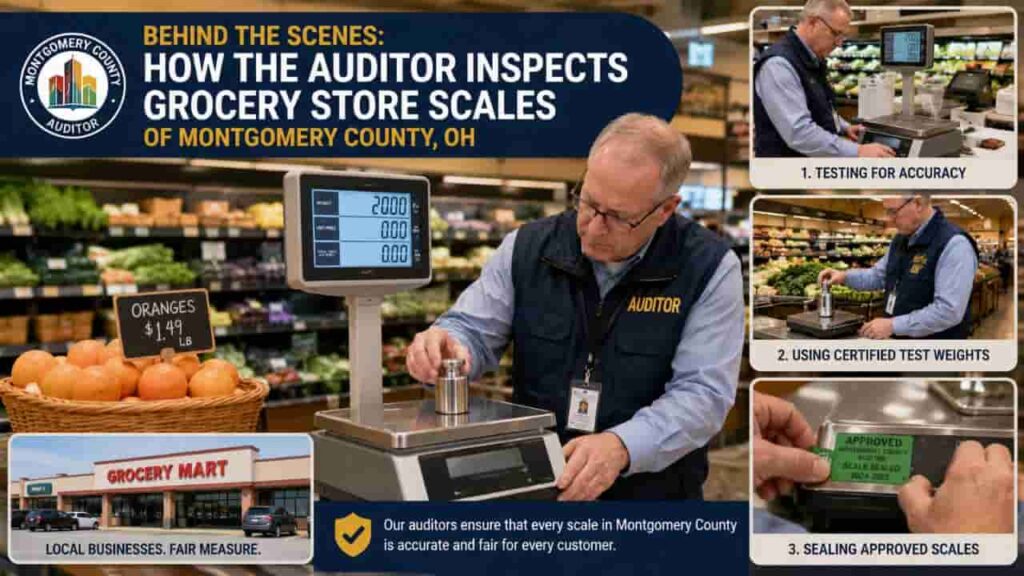
When a specialized inspector approaches a digital scale at a deli or produce counter, they begin by executing a baseline initialization check. They ensure the scale is perfectly level and zeroes out accurately. Next, the inspector deploys a series of highly accurate, certified cast iron or brass test weights.
These weights are systematically stacked on the weighing pan in specific patterns to evaluate “shift tests” (verifying the scale reads identically whether the food item is placed dead center or on an outer corner). If a device overcharges consumers by even a fraction of an ounce outside of narrow state allowed tolerances, it fails the validation. The inspector will instantly slap a secure, highly visible “Condemned” sticker over the digital display, legally locking out the device from commercial use until a certified scale repair technician services the hardware and the county re tests the mechanism.
Step by Step Guide for Consumers to Spot and Report Store Pricing Errors
If you believe a local grocery store or retail outlet is using inaccurate weighing equipment or charging more than the advertised shelf price, you should follow this systematic step by step roadmap to resolve the discrepancy.
Step 1. Observe the Digital Scale Screen During the Transaction
When buying items by the pound at a deli counter or self checkout lane, keep a close eye on the digital weight screen. Ensure that the scale reads absolute zero (0.00) before your items are placed on the platform platter. Watch for any sudden display jumps or erratic number fluctuations.
Step 2. Cross Reference Your Final Printed Receipts with Advertised Shelf Prices
Always request a physical printed receipt or access your digital store app ledger immediately after checking out. Take a moment to verify that the price charged for your produce matches the exact price per pound displayed on the aisle shelf tags or display placards.
Step 3. Check for the Official County Auditor Inspection Seal
Look for the colorful, dated county auditor consumer protection sticker affixed directly to the front or side of the checkout scale or scanning terminal. Note the year stamped on the emblem and see if the verification code matches the physical lane number you utilized.
Step 4. Submit a Formal Accuracy Complaint to the Auditor’s Enforcement Office
If you discover a clear scale error or a systematic scanning price mismatch that the store management refuses to fix immediately, document the issue. Take a photo of the receipt and the corresponding shelf tag. Submit a formal consumer complaint through the Montgomery County Auditor’s online portal or call the weights and measures hotline directly. The enforcement division reviews retail pricing complaints with high priority, frequently sending an inspector to the store within twenty four to forty eight hours to execute an unannounced compliance audit.
Conclusion
The behind the scenes efforts executed by the county auditor consumer protection teams are vital to preserving financial trust in our local retail markets. By understanding the rigorous field validation process, tracking the presence of the official validation seal, and knowing how to systematically file a report when errors arise, local shoppers can confidently protect their household finances. The Montgomery County Auditor remains a dedicated ally in ensuring that every commercial transaction across the Dayton region is accurate, transparent, and fully compliant with state legal standards. Keep this expert guide bookmarked to ensure your retail transactions remain secure and completely accurate.
FAQs
How can I tell if a grocery store scale has been officially tested?
Look for a highly visible, colored inspection sticker displaying the Montgomery County Auditor’s official emblem and the current certified calendar year stamped on the device.
What is tare weight and why is it important at checkout?
Tare weight is the empty weight of packaging materials. Stores must legally subtract this weight so you are billed strictly for the food itself.
What happens if a store scanner charges more than the shelf price?
This is a pricing accuracy violation. You should report the discrepancy along with a copy of your receipt directly to the Auditor’s weights and measures division.
Are self checkout scales subjected to the same county testing rules?
Yes. Every self checkout scale scanner combination is subjected to identical, unannounced physical tests using certified weights to guarantee continuous data tracking accuracy.
Who should I contact if I suspect a retail store scale is broken?
You can file an official scale accuracy complaint form directly through the Montgomery County Auditor’s public weights and measures web communication application.