When performing online real estate due diligence, pulling up an ownership name or property tax total is only the initial layer of research. For residential appraisers, home buyers, structural contractors, and property investors in the Dayton metro area, the real asset intelligence lies deep within the structural specification datasets. When you click through a parcel profile on the official web portal, the system opens specialized sub menus packed with advanced architectural codes. Understanding how to interpret these backend metrics is critical to identifying structural values, verifying legal renovations, and evaluating building conditions. This authoritative guide breaks down exactly how to use and translate the core rows found inside the Montgomery County building details framework and the structural residential card characteristics interface.
The Statutory Role of the Montgomery County Auditor in Mapping Building Specifications
Under Ohio property law, the County Auditor is legally mandated to serve as the chief assessor of all physical property developments within the county borders. To maintain an equitable tax base, the Auditor’s appraisal field agents must physically inspect or digitally audit every residential home and commercial structure down to its base engineering components. This precise physical data logging directly helps local internet users and property searchers in several practical ways.
- Establishes Certified Structural Baselines.
The Auditor explicitly logs the exact historical footprints, architectural styles, and foundation types of every physical building. - Prevents Property Structural Misrepresentation.
By hosting open records, the Auditor allows buyers to verify that a listing agent’s claims about a house perfectly match official building safety data. - Coordinates Local Tax Exemptions.
Accurate mapping of residential characteristics allows qualifying homeowners to successfully receive specialized property tax relief programs based on building usage.
Step by Step Guide to Accessing Land and Structural Characteristics
To find the hidden structural spec sheets on any house or business structure in Montgomery County, follow this operational step by step process process.
Step 1. Initialize the Online Property Search Application
Go to the official web application portal hosted by the Montgomery County Auditor. Open the core interactive Property Search search engine matrix from the main drop down header menu.
Step 2. Input Your Target Parcel Identifiers
Run a standard database query by entering either the exact site property address, the specific registered owner name, or the legal multi digit parcel identification number (PIN). Click search to open the matching property profile dashboard.
Step 3. Toggle the Residential or Commercial Structural Cards
Once inside the primary parcel overview summary page, scroll below the basic administrative tax lines. Look for the horizontal tab menu system and click directly on the sections labeled Land or Residential/Commercial to generate the advanced architectural specification layout.
Translating Technical Property Metrics on the Auditor System
The system’s interior data sheets use standardized real estate appraisal codes. The three column table below breaks down the most critical structural data variables you will find during a year built property search.
| Auditor Data Metric | Official Technical Definition | Practical Real Estate Use Case |
| Year Built / Effective Year | The original calendar year of structural construction, paired with an adjusted “Effective Year” indicating the property’s structural age based on recent modernizations. | Helps mortgage lenders verify if an older home has been sufficiently updated to meet modern financing guidelines. |
| Construction Grade Ohio Auditor | An alpha numeric structural quality score (e.g., Grade A through E) assigned by county field inspectors based on materials, framing, and craftsmanship. | Used by professional appraisers to accurately calculate structural replacement costs and architectural premium adjustments. |
| Story Height & Room Count | The official architectural level layout (e.g., 1.5 story, 2 story) coupled with a strict breakdown of total rooms, bedrooms, and full plumbing fixtures. | Allows building contractors to verify if a property’s current layout includes illegal unpermitted basement bedrooms or additions. |
Deep Dive into Residential Card Characteristics and Land Metrics
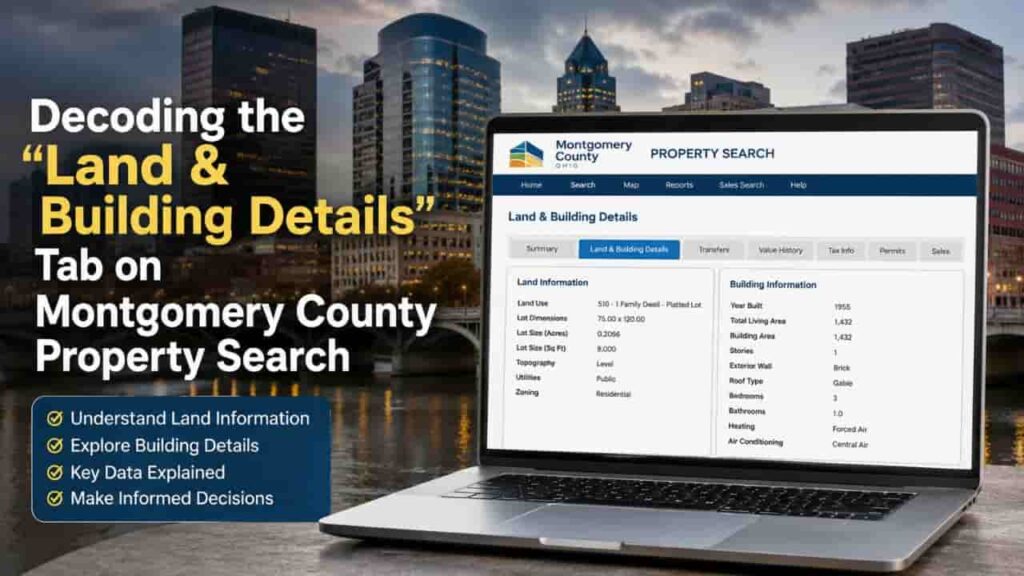
When you open the specialized structural menus, the data is split into two primary operational categories, Land Data and Card Characteristics. The land tab maps out the physical layout of the raw dirt, showing whether the parcel is a standard rectangular lot, an irregular acreage tract, or a premium corner plot. It also notes whether the site has access to public utilities like city water and sewer infrastructure or relies on private septic systems.
Concurrently, the residential structural card breaks down the external and internal construction elements. This includes tracking the exact square footage of finished basements, recording whether a garage is attached or detached, mapping out external wood or brick siding, and listing utility additions like central air conditioning loops. Reviewing these specific structural cards allows you to spot discrepancies between what a property looks like today and what is officially recorded in the county courthouse records.
Conclusion
Deciphering the technical variables formatted within the Montgomery County building details tab is a critical skill for executing successful real estate due diligence in Ohio. By moving past simple tax summaries and understanding the construction grades, effective years, and residential card specs, you protect your real estate investments from hidden compliance issues. Relying on this official public data report ensures your renovation planning and valuation models are backed by verified public facts. Keep this expert decoding guide bookmarked for your next local property search session.
FAQs
What is the difference between “Year Built” and “Effective Year” on the portal?
Year Built is the original structural construction date. Effective Year is an adjusted age metric calculated by the Auditor after major permitted modernizations or structural renovations are completed.
How does a “Construction Grade Ohio Auditor” rating affect a home’s valuation?
Higher grades (like Grade A or B) signify premium materials and architectural craftsmanship, which increases the structural replacement valuation calculated inside the Auditor’s database.
Where do I see if a property has a finished basement on the site?
Open the Residential tab and scroll down to the building characteristics section. The system explicitly displays finished basement square footage and below-grade room breakdowns.
Can a homeowner change the architectural style listed on their structural card?
Only if the current listing is factually incorrect. Property owners can request a manual property data review to fix clerical errors regarding layout styles.
Why does my property lookup show multiple structural cards?
If a single parcel identification number contains multiple independent residential dwellings, or separate commercial structures, the system generates an individual data card for each building footprint.