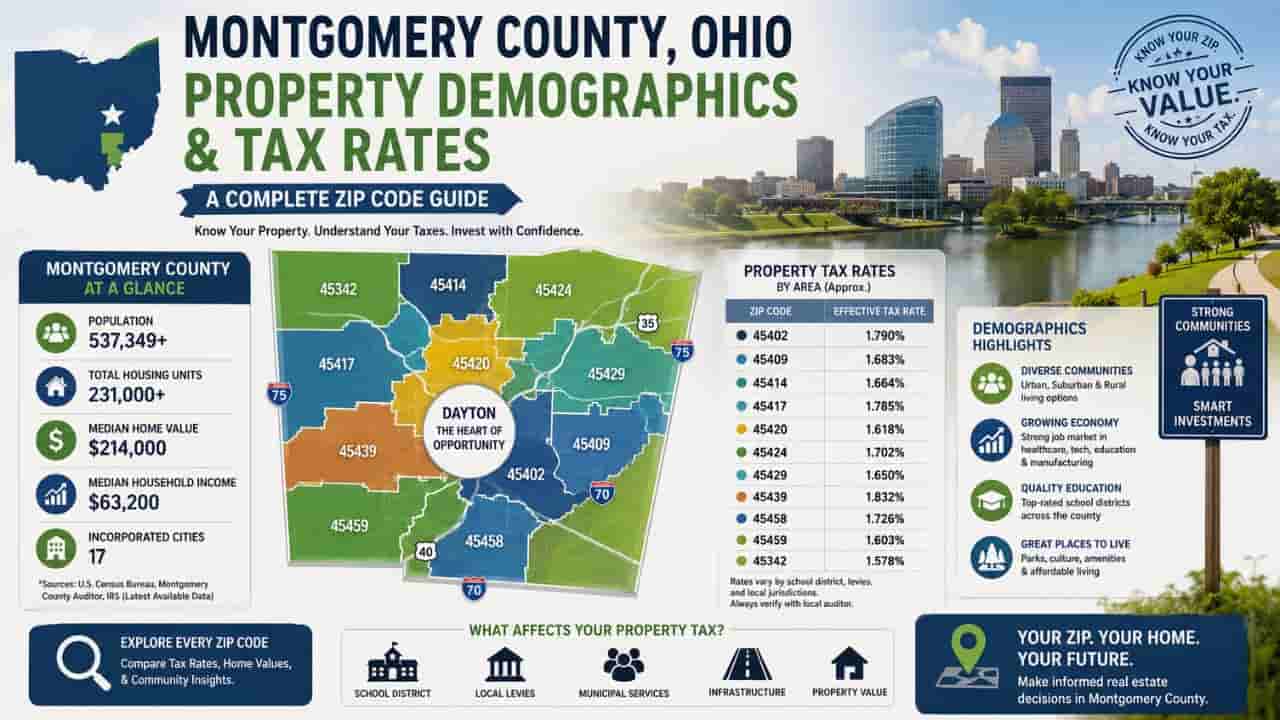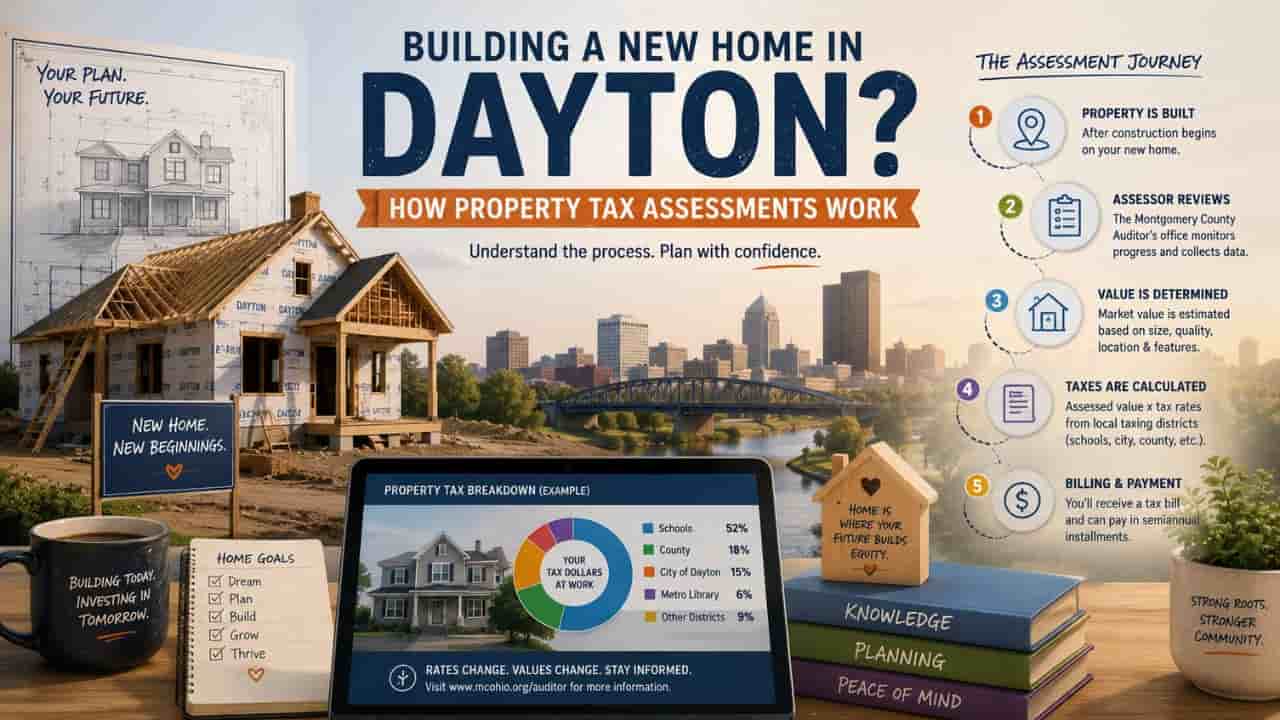
Property assessment is often viewed as a complex, “black box” process by many homeowners. However, in Montgomery County, Ohio, the assessment cycle is a highly regulated, transparent, and data driven procedure designed to ensure that the local tax burden is distributed fairly. As an expert in property valuation systems, I have analyzed the nuances of the Ohio Revised Code and the Montgomery County Auditor’s methodology. This guide provides an authoritative, step by step breakdown of how your property’s value is determined and what it means for your financial planning.
The Fundamental Purpose of Property Assessment
In Montgomery County, the primary goal of the assessment process is not to determine your tax bill directly, but to establish the fair market value of every parcel. This value serves as the baseline for calculating property taxes. The Auditor’s office acts as a neutral appraiser, ensuring that a $200,000 home in Dayton is treated with the same valuation logic as a similar home in Centerville.
The Role of the Montgomery County Auditor
The Auditor is mandated by state law to perform a “mass appraisal” of all properties. Unlike a private appraisal for a mortgage, a mass appraisal looks at large sets of data, market trends, and neighborhood characteristics to reach a statistical valuation.
The Two Major Assessment Cycles
Ohio law dictates a strict schedule for re evaluating property values to stay aligned with the ever changing real estate market.
| Cycle Type | Frequency | Scope of Work |
| Sexennial Revaluation | Every 6 Years | A full, “boots on the ground” viewing of every property in the county. |
| Triennial Update | Every 3 Years | A statistical update based on sales trends without physical inspections. |
| Annual Maintenance | Every Year | Updates for new construction, demolitions, or significant renovations. |
Step by Step, How Your Property Value is Calculated
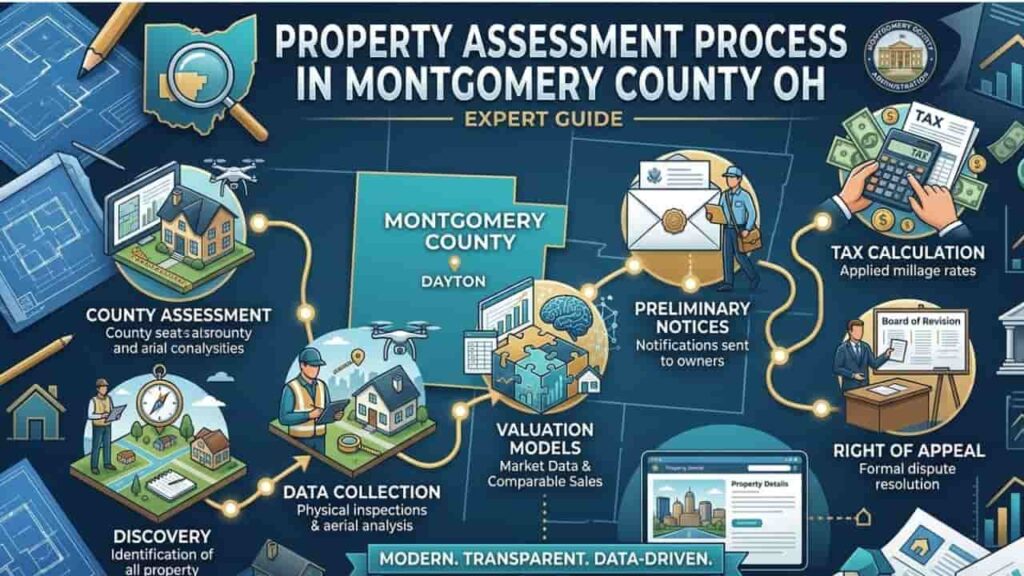
The assessment process involves four distinct phases. Understanding these steps will help you identify if your property has been incorrectly valued.
1. Data Collection and Physical Inspection
During a Sexennial Revaluation, the Auditor’s staff or contracted appraisers perform site visits. They look for:
- Exterior Features. Roof condition, siding, and structural integrity.
- Improvements. New decks, finished basements, or detached garages.
- Land Characteristics: Topography, acreage, and zoning restrictions.
2. Market Data Analysis (NLP & Trend Mapping)
The Auditor analyzes thousands of “armslength” transactions sales between unrelated parties to determine what buyers are currently paying for specific home types. They group properties into “neighborhood clusters” to ensure similar homes are compared accurately.
3. Applying the Valuation Formula
In Ohio, your tax bill is based on the Assessed Value, which is exactly 35% of the Total Appraised Market Value.
Expert Formula. Appraised Market Value x 0.35 = Assessed Taxable Value
4. Verification and Quality Control
Before values are finalized, the Ohio Department of Taxation must review and approve the Auditor’s findings to ensure they meet statewide standards for accuracy and fairness.
Critical Factors That Influence Your Assessment
Several variables can cause your property value to fluctuate independently of the general market.
- Zoning Changes. If your residential street is rezoned for commercial use, your land value may skyrocket.
- Neighborhood Sales. A “hot” neighborhood with multiple high priced sales will naturally pull up the assessed values of surrounding homes.
- Building Permits. Whenever you file a permit for a renovation, the Auditor is notified to update your property record card.
How to Review and Appeal Your Assessment
Transparency is a core value of the Montgomery County assessment process. Once the new values are released, you have the right to challenge them if they do not reflect true market value.
The Informal Review
Before filing a formal complaint, the Auditor often holds “Informal Value Review” sessions. This is your chance to present evidence such as a recent private appraisal or photos of structural damage to have your value adjusted without a hearing.
The Formal Board of Revision (BOR) Process
If you are still unsatisfied, you can file a formal complaint with the Board of Revision between January 1st and March 31st each year.
Checklist for a Successful Appeal:
- Recent Sales Comps. Find 3–5 similar homes that sold for less than your appraised value.
- Professional Appraisal. A private appraisal dated within 12 months of the tax lien date.
- Contract for Purchase. If you just bought the house for less than the assessment, your closing statement is the strongest evidence.
Common Myths vs. Official Facts
| Myth | Official Fact | Why It Matters |
| Myth 1: Higher assessment always means higher taxes. | Fact: Taxes only rise if the levy rates or the total budget increases. | Prevents unnecessary panic during revaluation years. |
| Myth 2: Appraisers must enter my home. | Fact: In Ohio, appraisers typically only perform exterior inspections. | Protects your privacy while maintaining data. |
| Myth 3: I can’t change my value for 3 years. | Fact: You can file a BOR complaint every year if the market drops. | Ensures your taxes remain fair and current. |
Conclusion
The Montgomery County property assessment process is designed to be a “shield” for the taxpayer, ensuring that no one pays more than their fair share. By staying informed about the Sexennial and Triennial cycles, reviewing your property record card for errors, and understanding the 35% assessment rule, you can take full control of your property’s financial standing.
If you suspect your value is incorrect, do not wait. Use the official tools provided by the Auditor to verify your data and protect your investment.
FAQs
What is the difference between Appraised Value and Assessed Value?
The Appraised Value is the 100% market value of your home. The Assessed Value is the 35% portion used to calculate your taxes.
Does the Auditor’s office set my tax rate?
No. The Auditor only determines the value. Tax rates (millage) are set by local voters through levies for schools, police, and parks.
Will a new roof increase my property assessment?
Generally, no. Regular maintenance like a new roof or painting is considered “upkeep” and doesn’t usually trigger a value increase like a room addition would.
When will I receive my new assessment notice?
Notices are typically mailed out in the summer or fall of a revaluation year (e.g., 2026 for Montgomery County).
Can I see the data used to value my home?
Yes. All property record cards and sales data are available to the public at mcrealestate.org.