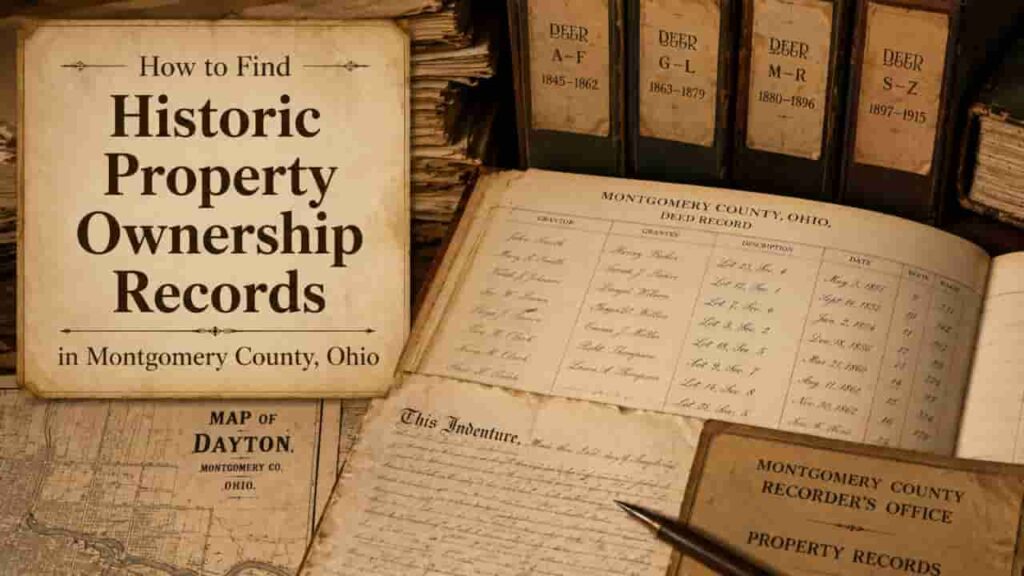
Tracing the archival lineage of a piece of real estate is a fundamental step during property acquisitions, historical preservation projects, and title insurance examinations. Whether you are an investor looking to uncover a property’s transactional patterns over the last twenty years, a genealogist researching family heritage in Dayton, or a title professional validating a clear chain of title, accessing public ownership logs is essential. In the state of Ohio, retrieving these structural transfer timelines does not require working through dusty warehouse shelves. The county’s open access databases store chronological property data logs that allow users to reconstruct ownership paths directly online. This comprehensive guide outlines the exact framework needed to work with Montgomery County historical property records, execute an efficient past ownership lookup, and audit recorded historical transfer logs.
The Custodial Role of the Montgomery County Auditor in Archiving Property History
Within the regional government framework of Ohio, the County Auditor operates as the permanent legal bookkeeper for all physical land subdivisions, tract assignments, and historical real estate transactions. Whenever a piece of property changes hands via a legal deed transaction, the Auditor is statutorily mandated to review the transaction, process state conveyance taxes, and update the civil parcel history cards. This structured record keeping framework directly protects and assists local real estate researchers through several key administrative roles.
- Maintains Chronological Transaction Ledgers. The Auditor registers every official property transfer, recording the precise sale date, legal transaction pricing, and deed instrument codes.
- Preserves Historical Land Boundaries. By maintaining chronological plat map adjustments, the Auditor tracks how larger historic acreage tracts were subdivided into modern urban lots.
- Enables Public Title Transparency. The Auditor provides open online search systems that allow citizens to inspect public property records instantly, preventing fraudulent real estate activity.
Step by Step Guide to Performing a Past Ownership Lookup
Tracing a property’s transactional history back through previous owners requires a methodical approach using the public database. Follow these operational steps to compile a comprehensive historical transfer list.
Step 1. Open the Public Property Search Portal
Launch your web browser and go to the official portal hosted by the Montgomery County Auditor. Locate and click on the primary interactive Property Search link found on the top top header to open the core data mainframe.
Step 2. Input Your Baseline Parcel Identifiers
Run a standard database query by entering the target property’s site street address, current owner’s name, or unique numerical parcel identification number (PIN). Click the search command button to pull up the primary property dashboard.
Step 3. GO to the Transfers Data Menu
Once the main summary interface opens, look past the current valuation blocks. Locate the horizontal horizontal sub menu and click directly on the specialized tab clearly labeled Transfers or Sales History.
Step 4. Extract Historical Reference Codes
The portal will display a chronological list detailing recent deed modifications. To look back further than the digital system’s immediate view, write down the listed Deed Volume/Page Numbers or official Instrument Numbers. These reference codes serve as your technical access keys to pull up older archival files from the County Recorder’s historic databases.
Decoding Historical Transfer Logs and Document References
When reviewing the archival data sheets generated by your search, the information is structured inside a standardized legal administrative index. The three column table below breaks down the primary data points you will encounter when tracing a historic chain of title Dayton Ohio.
| Historical System Metric | Official Legal Definition | Real Estate Analytical Application |
| Transfer Date & Sale Price | The official calendar date the deed transfer was validated by the county, paired with the exact monetary consideration exchanged for the real estate. | Allows market investors to calculate long term property appreciation rates and analyze historical neighborhood sales trends. |
| Conveyance Number | A unique administrative tracking number assigned by the Auditor’s office to verify that local county transfer taxes and fees were completely paid. | Used by title companies to confirm that a historical transfer was legally finalized and processed through the county courthouse. |
| Deed Type / Instrument Code | A short structural code indicating the legal mechanism used to transfer the property (e.g., Warranty Deed [WD], Quit Claim Deed [QC], or Sheriff’s Deed [SH]). | Critical for identifying whether a past owner received a clean title or if the property passed through a historic foreclosure or estate settlement. |
Utilizing Historical Records to Verify a Clean Chain of Title
Reconstructing a clean chain of title Dayton Ohio involves verifying that every historical transaction connected perfectly from the old seller (grantor) to the new buyer (grantee) without any administrative gaps. Uncovering an unrecorded transfer or an unresolved estate settlement from fifteen years ago can delay current financing approvals or complicate a property sale.
By utilizing the Auditor’s online historical transfer logs, researchers can quickly identify the exact timeline of past structural ownership. If an ownership gap appears in the digital system, you can use the listed deed references to access microfilm records at the county courthouse, ensuring your investment due diligence stands on completely verified legal facts.
Conclusion
Understanding the online search frameworks for Montgomery County historical property records is an invaluable skill for any individual conducting real estate research in Ohio. By moving past modern tax profiles and learning to analyze transactional histories, deed types, and conveyance logs, you secure an absolute edge in property due diligence. Relying on this official public data ensures your legal title checks and investment models are supported by authentic public facts. Keep this expert historical lookup guide close by for your next regional property title investigation.
FAQs
How far back can I trace a property’s ownership history online?
The digital portal typically displays detailed transfer logs going back to the mid 1990s. For older historical records, you must reference the county’s physical microfilm archives.
What does a sale price of “$0” mean on a historic transfer log?
A zero dollar transfer usually indicates a non market transaction, such as transferring a property into a family trust, a corporate LLC shell, or passing an estate to an heir.
What is the difference between the Auditor and the Recorder regarding property history?
The Auditor manages land parcels, tax valuations, and transfer transaction listings. The Recorder preserves the actual legal deed documents, mortgages, and physical lien attachments.
How do I find past owners if a parcel number was changed?
If a lot was subdivided, review the original plat map records on the GIS interface. This allows you to identify the historical parent parcel number and its old ownership records.
Why is a recent deed transfer not showing up on the historical logs yet?
New real estate transactions can take several business days to pass through official deed verification, tax payment processing, and final digital updating on the Auditor’s public portal.