Using the Montgomery County Auditor Property Search portal effectively requires more than just a basic address entry. It demands a technical understanding of how the Auditor’s Real Estate Division indexes and appraisals land data. As a property data specialist with years of experience working with thousands of parcel records, I have seen how a single incorrect search parameter can lead to skewed valuation data or missed tax exemptions. Whether you are a homeowner verifying a property tax assessment, a real estate investor conducting deep dive due diligence, or a legal researcher, the Auditor’s database is your primary source for “source of truth” government data. This guide provides the exact, high level roadmap you need to extract precise data from the Montgomery County official archives.
The Vital Role of the Montgomery County Auditor
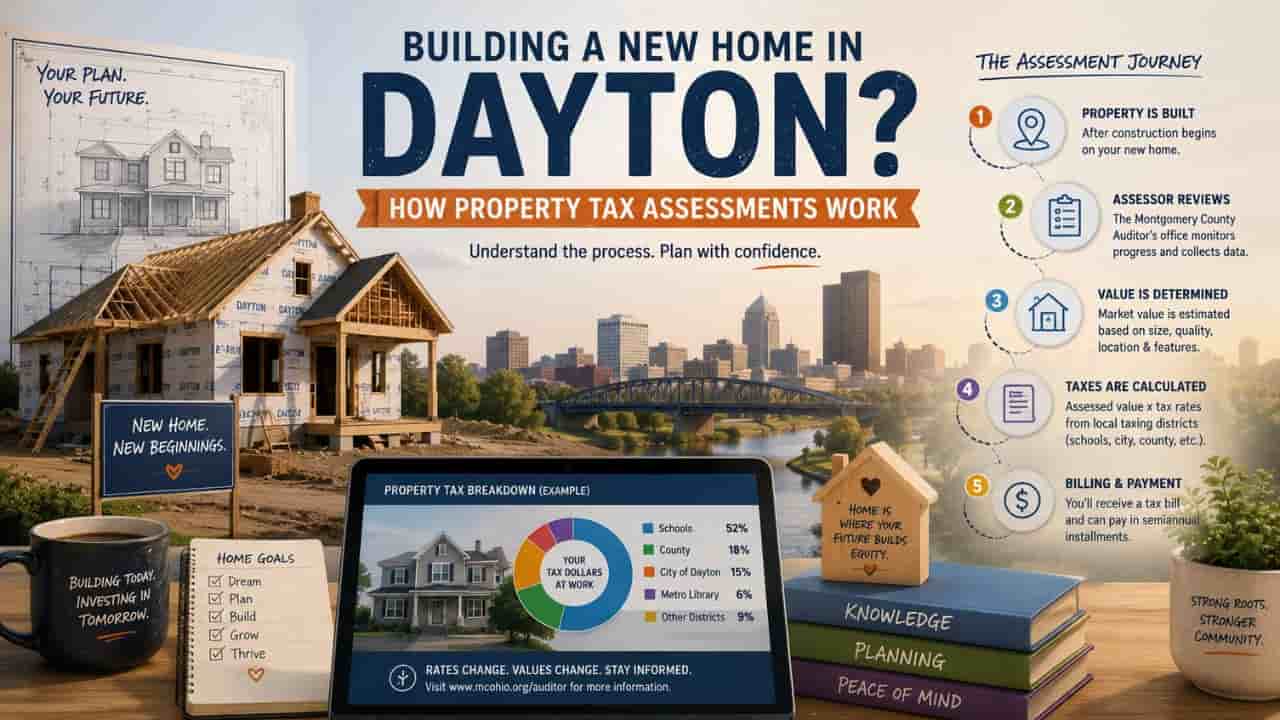
In Ohio, the County Auditor serves as the Chief Assessing Officer. Unlike the County Recorder, who handles deeds and legal titles, the Auditor is responsible for appraising every parcel to determine its fair market value. This valuation is the foundation of your property tax bill. Understanding this distinction is critical for anyone looking to appeal their taxes or verify building improvements.
Step by Step, Conducting an Effective Property Search
The Auditor’s official portal (mcrealestate.org) offers multiple search vectors. To achieve the most accurate results, follow this professional hierarchy of search methods.
1. Search by Parcel ID (Most Accurate)
The Parcel Identification Number (PIN) is a unique 10 to 12 digit string assigned to a specific piece of dirt. If you have your tax bill handy, this is the “No Fail” method.
- Step. Enter the numbers without dashes or spaces.
- Pro Tip. If you are researching a newly subdivided lot, the Parcel ID may not be active yet; in this case, use the “Parent Parcel” data.
2. Search by Street Address
This is the most common method for residents.
- Step. Enter the house number and the street name.
- Expert Advice.
Omit suffixes like “Street,” “Road,” or “Boulevard.” For example, if you live on “Main Street,” simply search “Main.” This prevents the system from filtering out results due to minor abbreviation discrepancies.
3. Search by Owner Name
Ideal for professionals tracking investment portfolios.
- Step.
Enter the Last Name followed by the First Name. - Constraint.
If the property is held in an LLC or a Trust (e.g., “Dayton Real Estate Holdings LLC”), you must enter the entity name exactly as it appears on the recorded deed.
Understanding Your Property Data Summary
Once you locate the parcel, you are presented with a “Summary” tab. To the untrained eye, this is a wall of numbers. To a pro, it is a financial story.
Essential Data Points in Montgomery County Records
| Data Category | What it Represents | Why it Matters |
| Appraised Value | 100% Market Value | The Auditor’s estimate of what the home would sell for today. |
| Assessed Value | 35% of Appraised Value | The actual dollar amount used to calculate your tax bill. |
| Land Use Code | Property Classification | Determines if the land is Residential, Commercial, or Agricultural. |
| Homestead Status | Tax Credit | Indicates if the owner is receiving senior or disability tax relief. |
Deep Dive, Beyond the Summary Page
The left hand menu on the Auditor’s site holds the “hidden gems” of property research.
Sales History and Transfer Data
Real estate investors rely heavily on this tab. It lists every recorded sale of the property, including the sale price and the Conveyance Number.
- Check for $0 Sales. A sale price of $0 typically indicates a family transfer or a move into a Trust, rather than a market based transaction.
Improvements and Residential Details
This section lists the “bones” of the structure.
- Square Footage. Ensure the Auditor has the correct “Total Living Area.” Errors here can lead to overpaying on taxes.
- Condition Rating. Look for terms like “Average,” “Good,” or “Fair.” This significantly impacts the valuation.
Common Challenges in Montgomery County Property Searches
Even the most seasoned researchers encounter hurdles. Here is how to solve the three most common issues.
Issue 1. The Address is Not Found
The Fix: Use the GIS Mapping System. Montgomery County has a robust interactive map. Zoom into the physical location of the property and click on the parcel. This will “force load” the record even if the text based search is failing.
Issue 2. Ownership Name is Outdated
The Fix: Public records take time to “sync.” If a house sold yesterday, the Auditor’s site might still show the old owner. Check the Recorder’s Office for the most recent Deed filing to confirm the transfer.
Issue 3. Confusion Over “Taxing District”
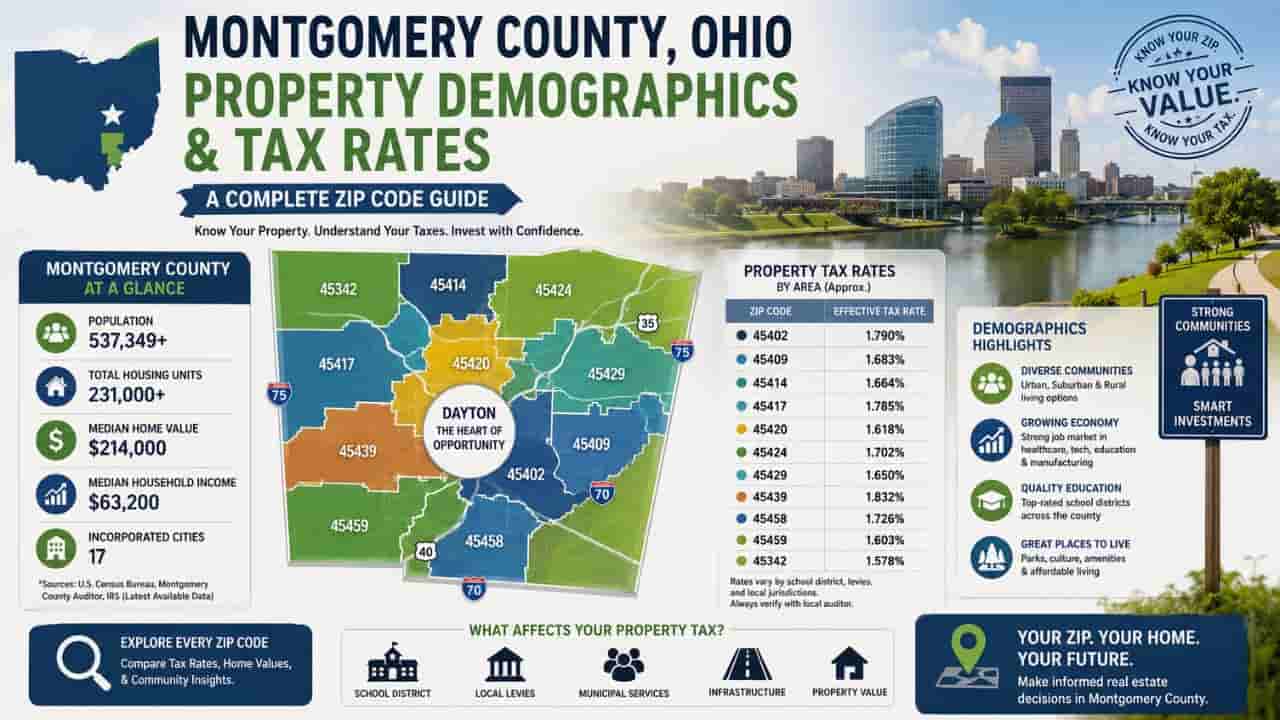
The Fix. Look for the “District” code. Montgomery County is divided into various school districts and municipalities (e.g., Dayton, Kettering, Huber Heights). Each has a different millage rate.
Professional Checklist for Property Analysis
- Verify the Acreage matches the legal description.
- Check the Year Built to determine if the home is reaching a major maintenance cycle (roof, HVAC).
- Confirm the Tax Status, check if the previous owner left unpaid “Special Assessments” (e.g., for street lighting or sewers).
- Analyze the GIS Topography to identify potential flood risks or drainage issues.
The Professional Bottom Line
The Montgomery County Auditor Property Search is an indispensable tool for maintaining the transparency of the Ohio real estate market. By following this guide, you ensure that you are making decisions based on verified, official data. Whether you are protecting your own investment or analyzing a new one, the Auditor’s database is your most powerful ally in the pursuit of land based truth.
FAQs
How often is Montgomery County property data updated?
The text based tax records are typically updated nightly. However, physical changes (like a new addition) may only be reflected after a building permit is closed or during the Triennial Update cycle.
Can I use the property search to appeal my taxes?
Absolutely. The search portal is the best tool to find “comparable properties.” If your neighbors’ similar homes are valued lower than yours, you can use that data in a Board of Revision (BOR) complaint.
Why is the owner’s name different from what I expected?
There is often a 7 to 14 day lag between a deed being recorded at the Recorder’s office and the Auditor’s website being updated.
Is there a fee for this search?
No. As per Ohio Public Records Law, the Montgomery County Auditor provides all parcel, owner, and tax data to the public at no cost.
How do I get an official Property Record Card (PRC)?
On the specific parcel page, click the “Print Property Card” link. This creates the official PDF document recognized by banks, insurance companies, and appraisers.