Embarking on the journey of building a custom residential home or executing a significant structural addition in the Dayton metropolitan area is an exciting milestone. However, amid managing general contractors, architectural blueprints, and local zoning permits, many future homeowners face an unexpected source of stress, understanding their upcoming property tax liabilities. A frequent pain point for property owners is the sudden realization that their initial post construction tax bill does not arrive immediately, leading to a false sense of security before a large, retroactive bill hits their escrow account. In Ohio, the valuation of an incomplete building relies on specialized site inspections and physical milestones. To protect your household finances from sudden escrow shortages, you must understand how the local government calculates real estate value while a home is still under construction. This comprehensive expert manual decodes the mechanics of a new construction property tax assessment Montgomery County timeline, explains exactly how does county auditor value new construction, and breaks down the step by step property tax timeline building a home Ohio homeowners encounter.
The Statutory Role of the Montgomery County Auditor in New Construction Appraisals
Under the Ohio Revised Code, the County Auditor is legally mandated to view, appraise, and log the fair market value of all newly constructed buildings, structural improvements, and vacant land parcels within county borders. When you build a home, the Auditor does not wait for the structure to be entirely finished before adjusting your property record card. Instead, the Auditor’s specialized appraisal division acts as a continuous tracking mechanism to ensure incremental property changes are accounted for. The Auditor supports and guides homeowners through several vital administrative functions.
- Monitors Local Building Permits.
The Auditor systematically reviews property records by pulling active residential building permits directly from municipal code enforcement offices across Dayton. - Executes On Site Visual Field Audits.
Certified county appraisers physically visit construction sites to confirm whether building progress matches the descriptions listed on official permits. - Determines Incremental Market Values.
The Auditor ensures tax equity by adjusting your parcel’s taxable baseline gradually, protecting you from paying full property taxes while your home is still just a concrete foundation.
Understanding the “Percent Complete” Progress Appraisal Formula
Ohio real estate law uses a strict statutory assessment date of January 1st for every calendar tax year. If a brand new home is not completely finished by January 1st, the Auditor deploys a specialized structural progress evaluation based on a “percent complete” appraisal formula. Rather than guessing the property value, field inspectors utilize a standardized valuation matrix to calculate the exact market value of the building materials already in place. The three column table below outlines the typical percentage allocation chart applied during a Dayton structural progress appraisal.
| Structural Construction Stage | Standard Percent Complete Weight | Direct Impact on Your Upcoming Property Tax Bill |
| Foundation & Excavation Completed | 15% to 20% Complete | The Auditor applies this minor percentage to the vacant land value, creating a small, partial assessment for the next tax cycle. |
| Framing, Roofing, & Siding Secure | 50% to 60% Complete | The structure is considered weather-tight. The partial tax bill increases to reflect a partially built residential dwelling. |
| Interior Drywall & Trim Finished | 85% to 90% Complete | Major structural components are set. Only minor cosmetic elements remain, signaling that the full tax assessment is imminent. |
The Chronological Property Tax Timeline When Building a Home in Ohio
To avoid unexpected financial shortfalls and manage your mortgage escrow accounts effectively, you must follow this chronological roadmap tracking how a new build moves through the county tax system.
Step 1. The Building Permit Triggers a County Property Update
The moment your builder pulls a residential structural permit from a local Dayton municipality or township office, a digital copy is automatically routed to the Montgomery County Auditor’s appraisal desk. This administrative event flags your parcel for a future visual field inspection.
Step 2. The Auditor Executes the January 1st Progress Inspection
As the mandatory January 1st tax lien date approaches, a certified county field appraiser will visit your building site. The appraiser documents the structural milestones achieved up to that exact winter date, applies the percent complete formula, and records a partial building valuation into the county database.
Step 3. Reviewing the First Partial Tax Assessment Bill
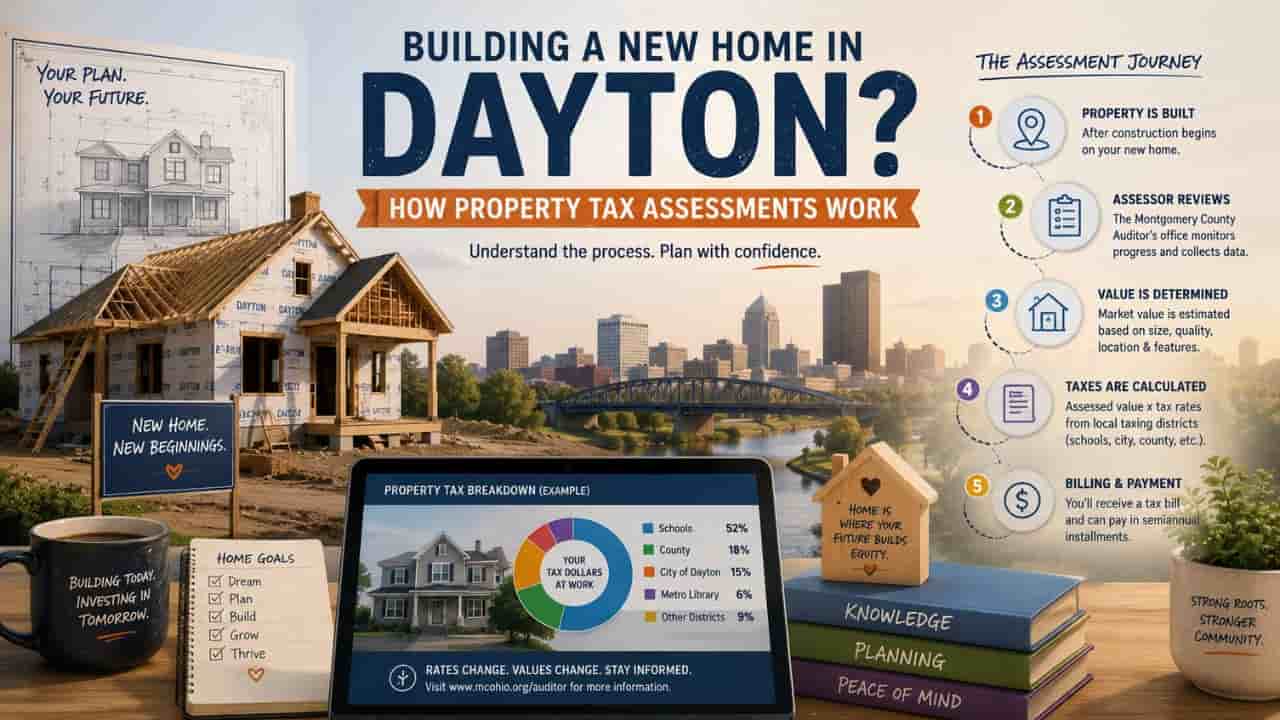
Because Ohio property taxes are billed one full year in arrears, your initial tax bill following the start of construction will arrive the following January and July. If your home was only 50% complete on the previous year’s assessment date, this bill will reflect the full land value plus a partial 50% building value.
Step 4. Final Inspection and Issuance of the Occupancy Certificate
Once your general contractor completes the final interior finishes, local building officials perform their final structural checks and issue an official Certificate of Occupancy. The Auditor logs this certificate date, marking the building as 100% complete on the county tax rolls.
Step 5. Transitioning to the Full Market Value Tax Roll
On the first January 1st date following your move in, the Auditor updates your property record card to reflect the 100% complete fair market value of the home. The full Montgomery County property tax rate will apply to the entire structure moving forward, which will show up on your standard semiannual tax bills the next calendar year.
The Critical Danger of the “Escrow Shock” Phenomenon
An essential operational trap that all new construction buyers and custom home builders must prepare for is a financial emergency known as escrow shock. When you secure a construction loan or transition into a permanent mortgage, your bank’s lending underwriters typically set up an escrow account based strictly on the raw, vacant land value of the lot. Because the Auditor’s full building assessment takes up to twelve to twenty four months to catch up and display on your regular tax bills, your bank may mistakenly believe your property taxes are incredibly low. Once the Auditor finally updates the parcel record to reflect a 100% finished custom home, your annual tax obligation can easily skyrocket by thousands of dollars overnight. To fix this gap, your mortgage company will immediately increase your monthly payment to cover the new tax rate and force you to pay back the previous year’s shortage all at once. Homeowners can easily avoid this stressful situation by sending their estimated post construction value directly to their lender’s escrow department on day one.
Conclusion
Understanding a new construction property tax assessment Montgomery County process does not have to disrupt your household budget. By understanding how the County Auditor deploys the percent complete formula and tracking the standard tax calendar timeline, you can completely eliminate the threat of sudden escrow shock. Use the transparency tools provided by the Auditor’s appraisal division to track your progress, budget carefully for your upcoming full valuation, and protect your brand new property investment from unexpected financial surprises.
FAQs
How does the county auditor value new construction properties?
The Auditor evaluates new construction by checking local building permits, conducting physical site inspections, and applying a standardized “percent complete” formula based on structural milestones every January 1st.
Why is my new home’s first property tax bill so low?
Ohio property taxes are billed one year in arrears. Your initial bill likely reflects only the vacant land value or a minor partial assessment from the previous year’s construction stage.
What is escrow shock and how can I prevent it?
Escrow shock occurs when your mortgage company recalculates your monthly payment after a low vacant land tax bill transitions into a full home assessment. You can prevent it by saving extra cash early.
Do I pay full property taxes if my home is only half finished?
No. Under Ohio real estate law, you only pay taxes on the land value plus the exact percentage of structural materials physically in place on the January 1st assessment date.
Who should I notify once my custom home building project is completely finished?
You should notify the Montgomery County Auditor’s residential appraisal department directly to ensure your final tax valuation is accurately scheduled and recorded.