
Property taxes can be confusing, especially when homeowners start hearing terms like “millage rates” used in tax statements. In Montgomery County, millage rates determine how much property tax you will pay each year, based on the assessed value of your home and the tax levies approved in your local community.
Understanding how millage rates work is extremely important for budgeting, estimating future taxes, and reviewing whether your property bill is accurate. This guide breaks down Montgomery County millage rates in a simple way so every homeowner can confidently understand their taxes.
What Are Millage Rates?
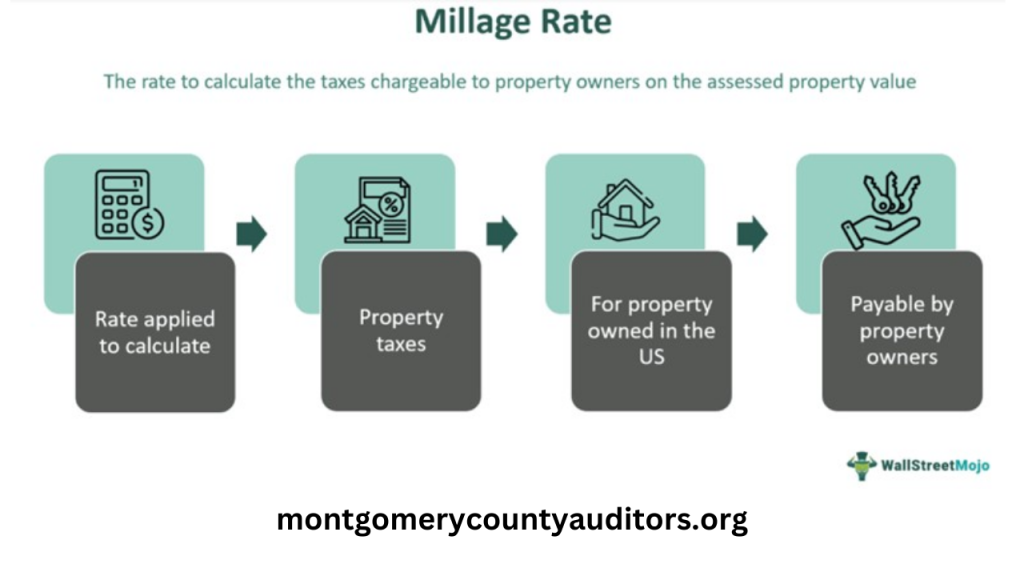
A millage rate is a tax rate used to calculate local property taxes.
Definition:
One mill equals $1 in tax for every $1,000 of a property’s assessed value.
So, if a millage rate is 70 mills, you pay:
70 × $1 = $70 in tax for every $1,000 of taxable value.
Why Millage Rates Matter in Montgomery County
Montgomery County property taxes depend on these millage rates. They directly determine:
- Total tax owed each year
- Tax changes over time
- Bill differences between cities and school districts
- Why neighbors pay different tax amounts
Millage rates allow the county to fund public services, so homeowners benefit from safe neighborhoods, public education, maintained roads, and emergency protections.
Who Sets Millage Rates in Montgomery County?
Montgomery County does not decide millage rates alone. Rates are influenced by:
- City governments
- Local school boards
- Park districts
- Library districts
- Townships
- Countywide levies
- Voter-approved tax proposals
Every local taxing authority applies its own rate, and all combined rates create your final property bill.
How Millage Rates Affect Your Property Tax Bill
Your property tax formula looks like this:
Assessed Value × Millage Rate = Total Annual Property Tax
For most homeowners, the assessed value is 35% of market value in Ohio counties.
Example:
If your home’s market value is $200,000
35% taxable value = $70,000
Millage rate = 80 mills
Calculation:
80 mills ÷ 1000 = 0.080
$70,000 × 0.080 = $5,600 yearly tax bill
The higher the millage rate, the higher your total tax cost.
What Determines Millage Rate Numbers?
Several factors impact rates in Montgomery County:
1. School District Funding
School districts take the largest share of millage taxes.
2. City or Township Levies
Local communities fund police, fire, and public works.
3. County Services
Montgomery County millage supports:
- Courts
- Sheriff
- Elections
- County buildings
4. Voted Levies
Residents vote to pass new mills to fund upgrades or replace old levies.
5. Property Reappraisal Cycles
Every 3 to 6 years, property values are updated, which affects millage revenue.
Why Millage Rates Differ Across Montgomery County
Homeowners in different areas pay different millage rates because:
- School districts differ in size and funding needs
- City budgets vary
- Local property values do not match countywide averages
- Some areas approve extra local levies
- Fire/EMS districts vary
Two homes worth the same value may pay completely different tax amounts if located in separate districts.
Which Taxing Groups Use Millage Collections?
Your tax bill goes toward:
- Public schools
- County services
- Police departments
- Fire departments
- Cities & townships
- Parks and recreation
- Libraries
- Senior services
- Road and infrastructure maintenance
Millage rates fuel essential public service operations across Montgomery County.
Effective vs. Voted Millage Rates
Homeowners often see two types of millage numbers:
Voted Millage
These are mills approved by public vote. They do not automatically factor inflation protection.
Effective Millage
This amount adjusts downward based on real estate value growth. It prevents taxes from increasing too fast.
Understanding the difference is key to reading tax bills correctly.
How Homeowners Can Lower Their Millage Based Taxes
Even with high millage rates, you may qualify for reductions. Montgomery County residents can apply for:
Homestead Exemption
Reduces taxable value for seniors and disabled homeowners.
CAUV Agricultural Reduction
Applied to qualified farmland.
Tax Appeals
Property owners may challenge assessed value.
Credits for Owner Occupied Homes
A small percentage reduction applied to primary residences.
Why Montgomery County Millage Rates Change Over Time
Rates are not permanent. They shift due to:
- New levy elections
- Expiring levies
- Changes to district boundaries
- Property value adjustments
- School funding needs
- Voter decisions
Homeowners should review their rates every year to understand increases.
Conclusion
Millage rates are a fundamental part of Montgomery County’s property tax system. They determine how much homeowners pay for schools, police departments, roads, parks, libraries, and essential services. By understanding millage rate structure, every resident can predict future tax bills, compare communities, and make smart financial decisions about homeownership.
Whether you want to relocate, purchase new property, or appeal your value, knowing how millage rates work gives you clear tax control and long-term financial advantage.
Frequently Asked Questions
1. Do homeowners vote on millage rates?
Yes, most millage rates are approved through local voting elections.
2. Can millage rates be lowered?
Only through levy expiration or voter rejection of renewal proposals.
3. Do seniors pay lower millage rates?
They pay the same millage rate, but exemptions reduce taxable value.
4. Why do school districts take the highest millage portion?
Public education requires large, ongoing funding.
5. Will millage rates rise in the future?
Rates depend on community needs and voter outcomes.
