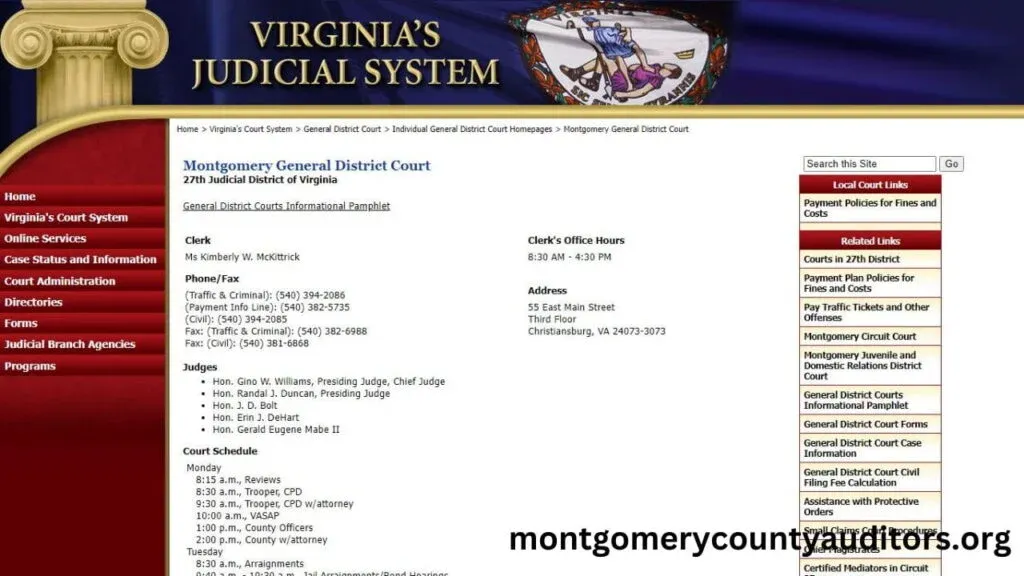
Court documents in Montgomery County are essential legal records that may be needed for a variety of reasons, including personal reference, legal proceedings, property transactions, or professional requirements. Requesting copies ensures that individuals, attorneys, and businesses have accurate and certified information from the county court system. Understanding the correct process, required information, fees, and procedures will make obtaining court documents straightforward and efficient.

Types of Court Documents Available
Montgomery County maintains several types of court records. Commonly requested documents include:
- Civil Court Records: Contracts, lawsuits, judgments, and small claims.
- Criminal Court Records: Felony and misdemeanor filings, court hearings, case outcomes, and sentencing information.
- Family Court Records: Divorce decrees, custody agreements, child support orders, and domestic relations filings.
- Probate Court Records: Wills, estate settlements, guardianship records, and trusts.
- Traffic Court Records: Tickets, hearings, and traffic violation outcomes.
Each type of document may be requested for reference, proof, or certified submission in legal or official matters.
Who Can Request Court Document Copies
Court documents in Montgomery County are public records, so most documents are available to:
- Individuals involved in a case
- Attorneys representing clients
- Businesses verifying legal matters
- Researchers or journalists
- General public for research or verification purposes
Some records, however, may be restricted or sealed for privacy reasons, such as juvenile cases, adoptions, or sensitive family law matters.
How to Request Court Documents
Step by step:
Step 1: Identify the Court
The first step is knowing which Montgomery County court holds the documents. Courts include:
- Common Pleas Court: Major criminal and civil cases
- Municipal Court: Traffic violations, misdemeanors, small civil cases
- Domestic Relations Court: Family law cases
- Probate Court: Wills, estates, and guardianships
- Juvenile Court: Minor-related cases (restricted access)
Identifying the correct court ensures faster processing.
Step 2: Gather Required Information
Providing accurate details helps locate the records quickly. Commonly required information includes:
- Full legal name(s) of parties involved
- Case number (if known)
- Type of case (civil, criminal, probate, family, traffic)
- Filing date or approximate date range
- Attorney names (if applicable)
Step 3: Submit a Request
Requests for copies can be made in the following ways:
- In Person: Visit the appropriate court clerk’s office to submit a request form. Clerk staff can provide assistance in locating and copying documents.
- Written Request: Mail a formal request to the clerk’s office, including all relevant case information, your contact details, and payment for fees.
- Online Request (if available): Some Montgomery County courts allow preliminary search or request forms online. Verify which documents can be accessed digitally.
Step 4: Pay Applicable Fees
Document copies may require payment. Fees vary depending on:
- Number of pages
- Certified copies vs. regular copies
- Special processing requests
- Mailing or courier services
Clerks typically accept cash, check, or card payments for in-person requests, while mailed requests require check or money order.
Step 5: Receive Documents
Once processed, copies can be:
- Picked up in person
- Mailed to your address
- Accessed through a secure online portal (if provided by the court)
Certified copies carry a stamp or seal indicating official authenticity and are required for legal or professional submissions.
Tips for a Smooth Request Process
- Confirm court hours before visiting
- Have full case details ready
- Ask if a certified copy is needed or if a regular copy suffices
- Check for restrictions or sealed case status
- Keep a record of your request for reference
- For out-of-state requests, include a self-addressed stamped envelope for mailing
Following these tips will minimize delays and ensure you receive accurate records.
Limitations and Restrictions
While most court records are public, certain documents are restricted or confidential:
- Juvenile Court Files: generally not accessible to the public
- Adoption Cases: sealed to protect privacy
- Family Law Cases: some details may be restricted by court order
- Sealed or Expunged Cases: only accessible by involved parties or attorneys
Always confirm eligibility before submitting a request.
Why You Might Need Court Document Copies
- Legal Representation: Attorneys require copies to prepare cases or appeals.
- Personal Reference: Individuals may need documentation for family, financial, or legal matters.
- Real Estate and Financial Transactions: Court judgments may affect property ownership or debts.
- Background Checks: Employers or organizations may verify criminal or civil history.
- Academic or Journalistic Research: Verified legal data supports research or reporting.
Having certified copies ensures that the document is legally recognized for official purposes.
Conclusion
Requesting court document copies in Montgomery County is a process designed to ensure transparency and accessibility for residents and legal professionals. By identifying the correct court, gathering accurate case information, submitting a formal request, paying the necessary fees, and following up appropriately, individuals can access both certified and non-certified copies of important legal records. Knowing the rules and procedures also helps navigate restricted or confidential cases, ensuring a smooth and reliable process.
Frequently Asked Questions
1. Can anyone request court documents in Montgomery County?
Most documents are public, but some cases, like juvenile or adoption files, are restricted.
2. What is the difference between a certified copy and a regular copy?
A certified copy is stamped or sealed by the clerk’s office and is legally recognized for official purposes. Regular copies are for personal reference.
3. Are there fees for obtaining court documents?
Yes, fees vary depending on the number of pages, certified status, and delivery method.
4. Can court documents be requested online?
Some courts offer preliminary online requests, but most documents require in-person or written submission.
5. How long does it take to receive copies?
Processing time depends on the court, document type, and request method; it can range from same-day pick-up to several weeks for mailed requests.