If your recent assessment notice shows a sharp increase in value, you could be overpaying property taxes in Montgomery County, Ohio. For example, an overvaluation of $30,000 at an effective tax rate near 2% can translate into $600 or more in unnecessary annual taxes. Homeowners have the statutory right to challenge inaccurate valuations through the Montgomery County Board of Revision and present market-based evidence for correction.
Reasons Homeowners Appeal Assessments
People usually file appeals for one or more of the following reasons:
- The market value seems higher than what similar homes are selling for.
- The property has structural damage or deterioration that was not considered.
- Square footage or building data on record is wrong.
- Neighboring homes of the same size are assessed at lower values.
- Recent purchase price was lower than the county estimate.
Presenting strong evidence for any of these reasons can significantly support the appeal.
Where to File a Appeal Property Tax
Appeals in Montgomery County are handled by the Board of Revision (BOR). This department reviews property value challenges and holds hearings to evaluate evidence.
All appeal forms and submission instructions are available through the Montgomery County Auditor’s office.
Filing Deadline for Appeal Property Tax
The deadline is extremely important.
Homeowners must file their appeal between:
January 1 and March 31 of the tax year following the assessment notice.
Appeals submitted after March 31 are automatically rejected unless special legal conditions apply.
Steps to Appeal Property Tax Assessment in Montgomery County, Ohio
Challenging your property tax assessment in Montgomery County, Ohio can significantly reduce your annual tax burden if your home has been overvalued. Follow these structured steps to ensure your appeal is thorough, legally compliant, and has the best chance of success with the Montgomery County Board of Revision.
Step 1: Review Your Assessment Notice
The first step in appealing your property tax assessment is to carefully examine the assessment notice mailed by the Montgomery County Auditor’s Office. Confirm the new taxable value listed, the property details, and any changes compared to prior years. Even small errors in square footage, lot size, or property type can affect your taxes. Noting these discrepancies early ensures your appeal targets specific overvaluations.
Step 2: Gather Market Evidence
Strong evidence is critical when challenging a property tax assessment. Collect recent sales of comparable homes in your neighborhood to demonstrate fair market value. Obtain professional appraisals, repair estimates for existing damage, and photographs documenting property issues. Include original purchase documents, invoices for renovations, or any market reports. Proper documentation strengthens your case before the Montgomery County Board of Revision.
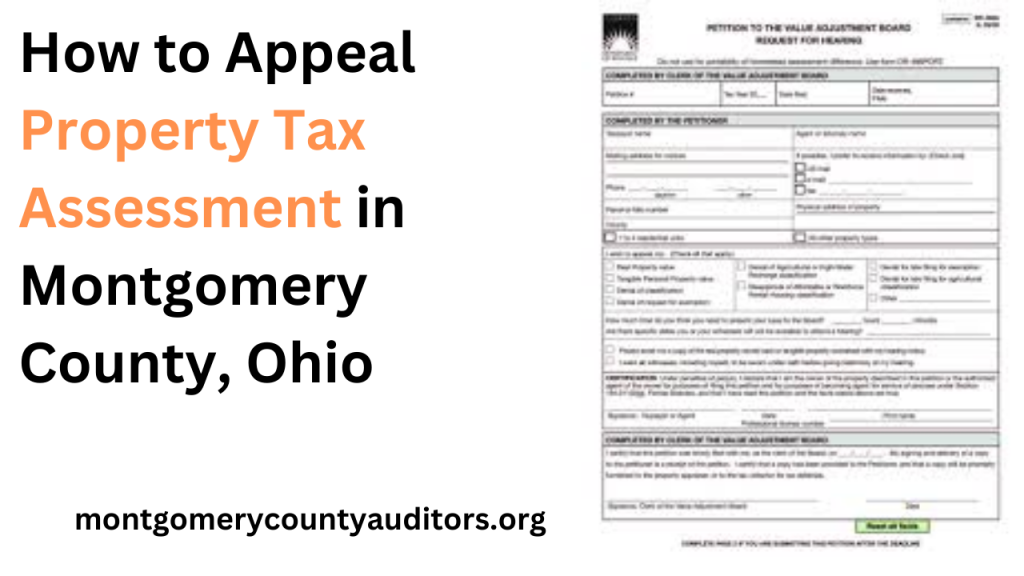
Step 3: Complete the DTE Form 1
The DTE Form 1 is the official application used to dispute your property valuation. Complete all sections accurately, providing property details, current assessed value, and the evidence collected. Incomplete or inaccurate forms may delay your appeal or result in automatic denial. Ensure you attach all supporting documents to present a clear and compelling case.
Step 4: Submit the Form
Once completed, submit your DTE Form 1 to the Auditor’s Office or the Montgomery County Board of Revision either in person or by certified mail. Early submission is important because appeals are only accepted within specific deadlines each year. Retain copies of all documents and proof of submission to protect your appeal rights in case of disputes.
Step 5: Attend the BOR Hearing
After submission, the Board of Revision schedules a hearing. During this hearing, you can present your evidence, explain discrepancies, and challenge the county’s valuation. It is essential to clearly articulate why the assessed value is inaccurate using data, appraisals, or market comparables. The BOR may question both homeowners and county representatives before making a fair determination of property value.
Step 6: Wait for the Decision
Following the hearing, the Board of Revision carefully reviews all submitted evidence, testimonies, and documentation. The decision is mailed to the property owner and may adjust the assessed value if the appeal is approved. A reduction in assessment translates to a lower annual property tax in Montgomery County, Ohio. Keep all documents for your records and verify the updated tax bill once issued.
Tips to Improve Appeal Success
- Always use real comparable sales, not asking prices.
- Professional appraisals carry strong influence.
- Avoid emotional arguments, stick to facts and numbers.
- Bring organized paperwork to the hearing.
- Know your neighborhood market before filing.
What Happens If the Appeal Is Denied?
If the BOR rejects the appeal, homeowners still have legal options:
- Ohio Board of Tax Appeals
- County Court of Common Pleas
These secondary appeals require more time and may involve legal assistance.
How the Appeal Affects Tax Bills
If the appeal is successful:
- Future tax bills are adjusted based on the new value.
- Overpaid taxes may be refunded or credited.
If unsuccessful, the tax amount remains unchanged.
Why Filing an Appeal Matters
Even a minor assessment reduction can save hundreds of dollars every year. Over the long term, this adds up to major savings, especially for long-term homeowners and retirees.
Conclusion
Appealing a property tax assessment in Montgomery County, Ohio, gives homeowners the opportunity to correct inaccurate property values and potentially reduce their tax burden. By understanding assessment methods, meeting filing deadlines, and submitting proper documentation through the Montgomery County Auditor and Board of Revision, property owners can protect their financial interests. A well-prepared appeal ensures fair property valuation, promotes transparency, and helps maintain accurate property tax records across Montgomery County.
Frequently Asked Questions
1. When can I appeal my Montgomery County property value?
Appeals are accepted yearly between January 1 and March 31.
2. Is hiring an appraiser necessary?
Not required, but it significantly strengthens evidence.
3. Does a recent purchase price help?
Yes, if the sale was recent, arms-length, and reflects true value.
4. Can commercial properties appeal too?
Yes, both residential and commercial owners may appeal.
5. How long does the decision take?
It depends on case volume, but decisions may take several months.